Right on cue, Apple CEO Steve Jobs flipped the switch to enable iAds to pop up on all iOS4 devices. What are iAds, you ask? They are a new kind of ad tailor-made for mobile devices. Apple invites advertisers to fill them with “interaction and emotion” so as to entice users to dive into them. iAds act more like apps than ads in that they don’t take you out of your present experience (in Safari or an app) and you always have the option to exit the ad by tapping a tiny “x” that is required to sit in the corner. Jump here to learn more about iAds. Anyway, iAds are live today and you can take a sneak peek into how one looks in the video above. It’s an ad for the Nissan Leaf, and it features an impressive commercial that’ll make any technology enthusiast squeal in pleasure.
At Google I/O in May, Google unveiled its latest plot to enter our homes with Google TV. The service is described nicely here, but if you find yourself wanting more, click play above to discover what Google TV is all about.
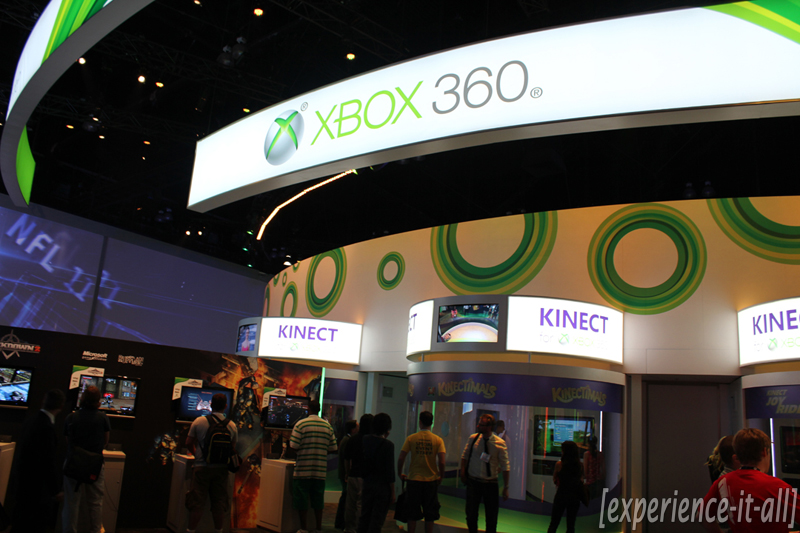
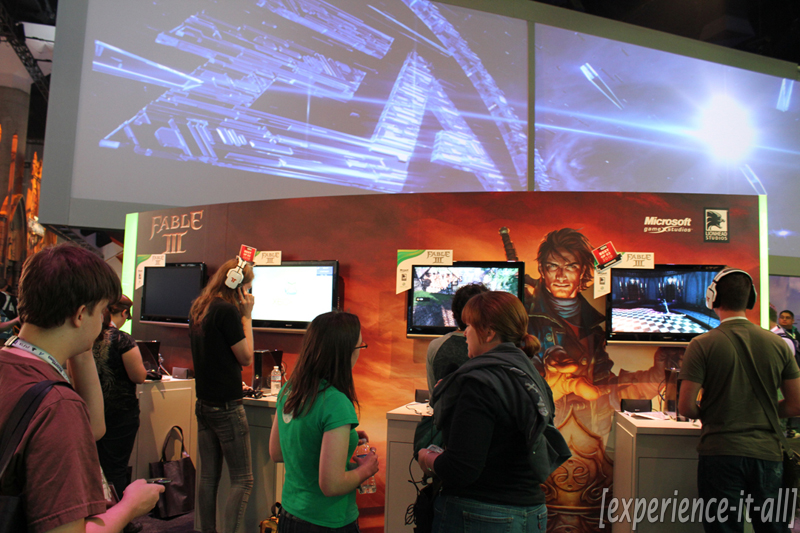
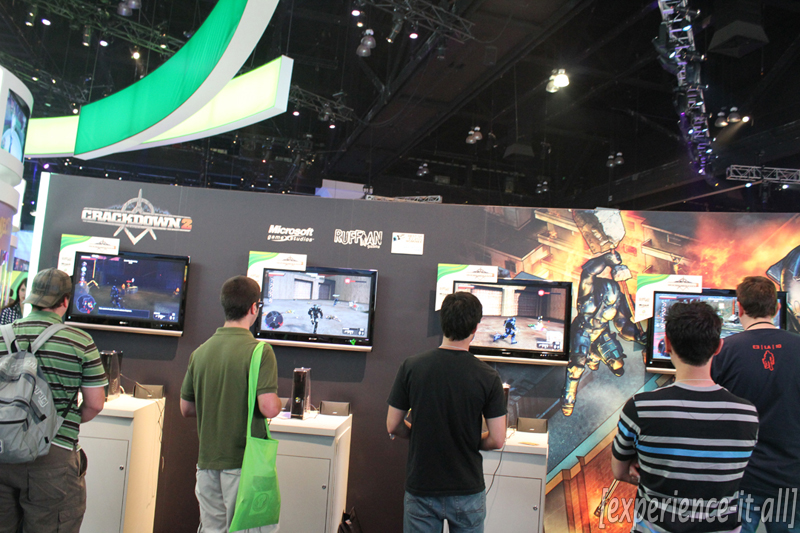
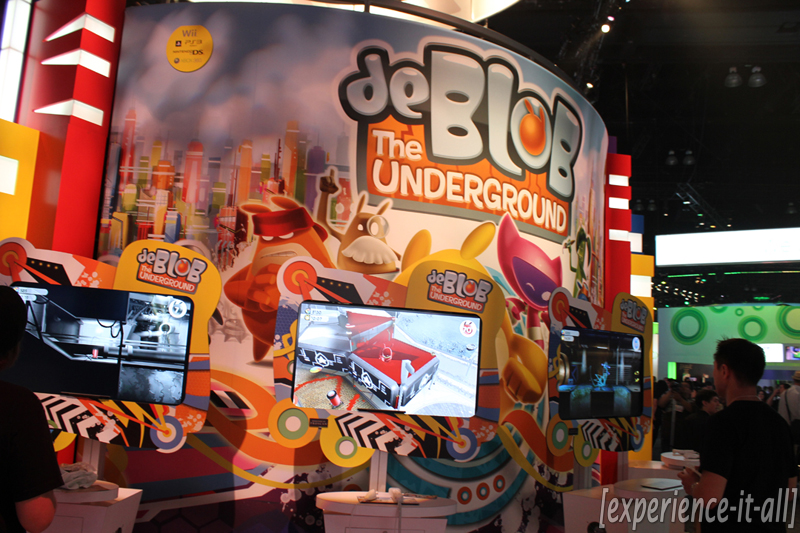
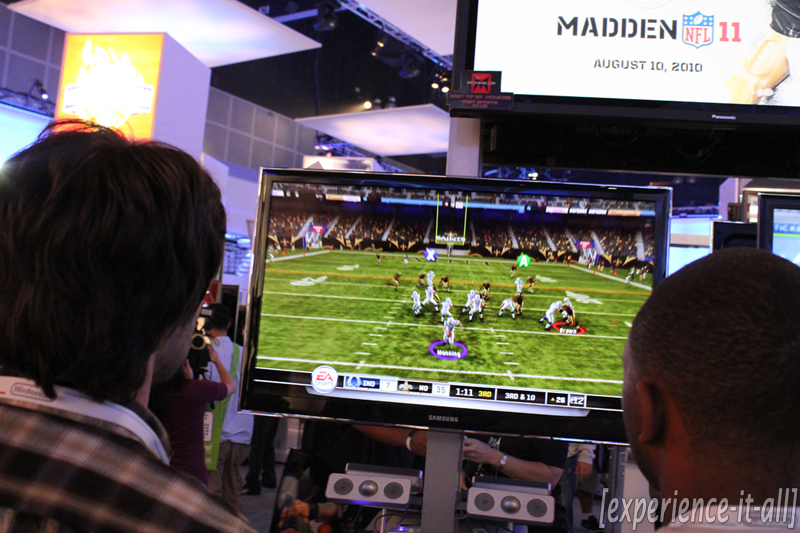
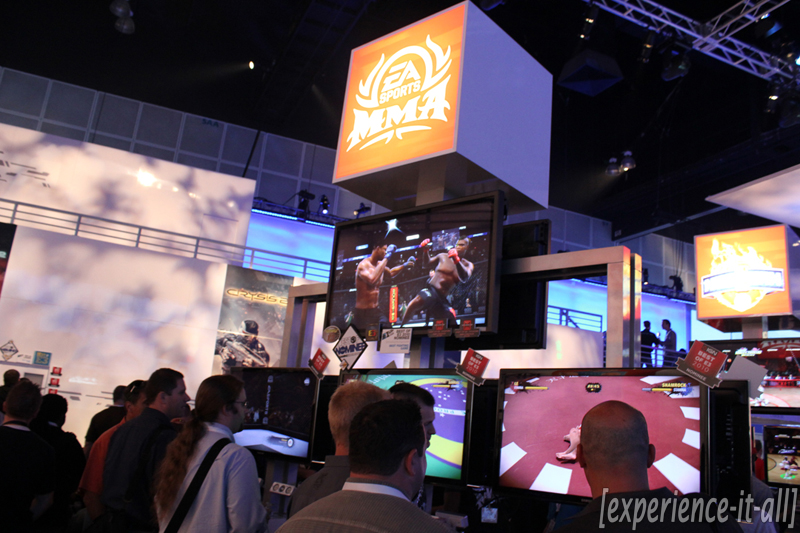
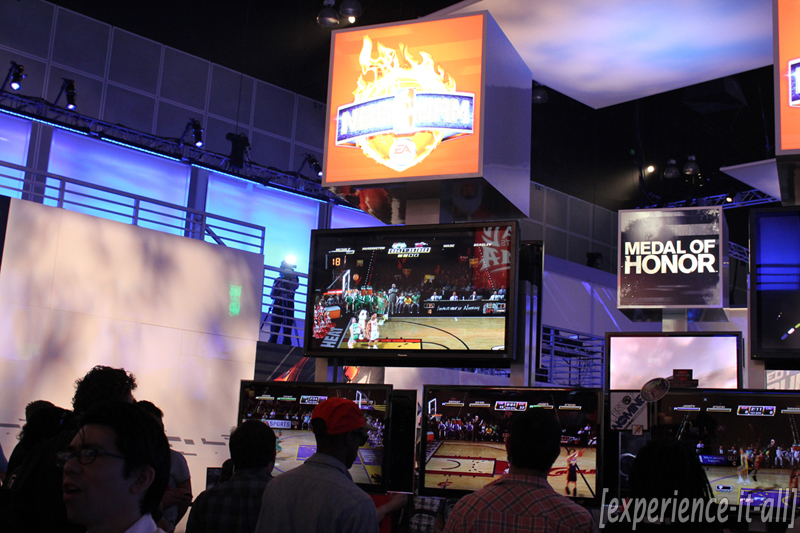
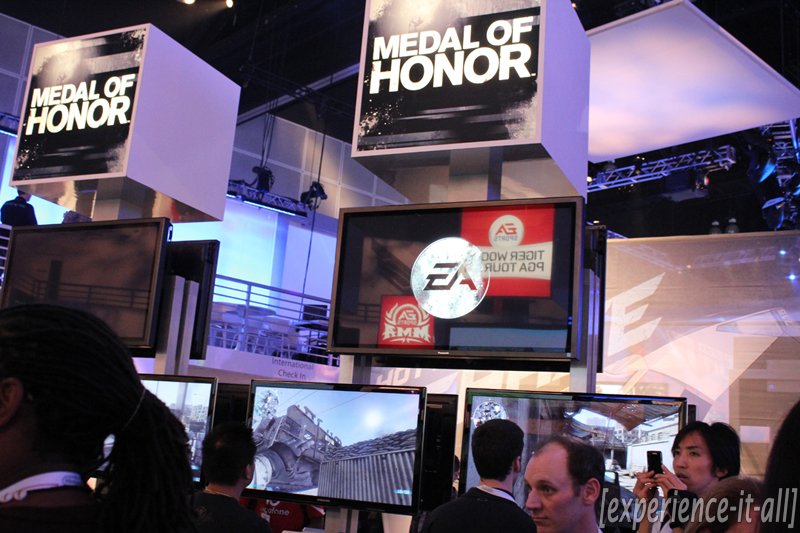
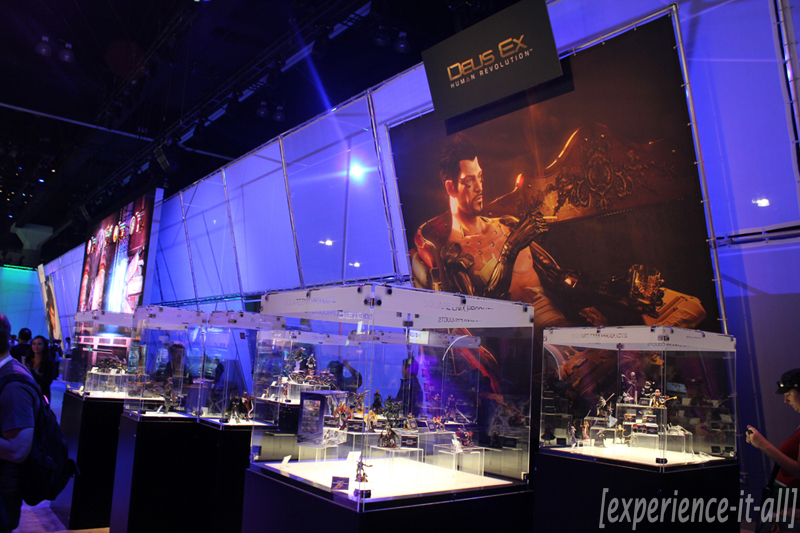
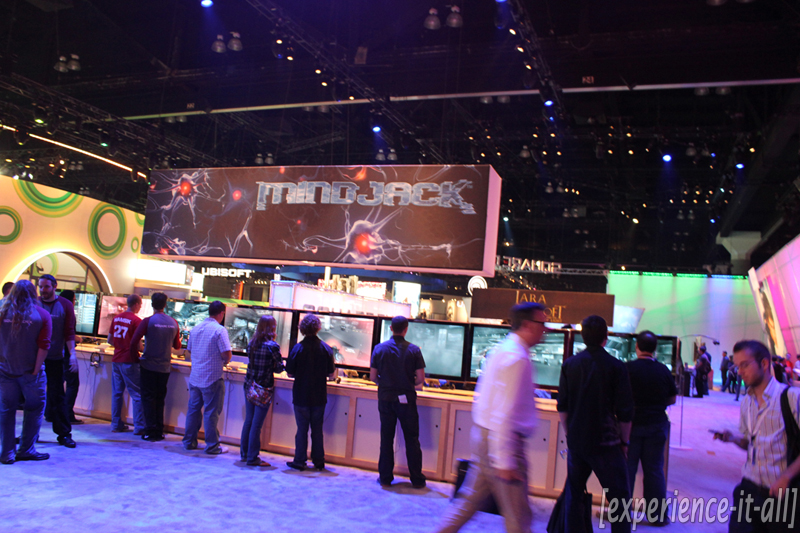
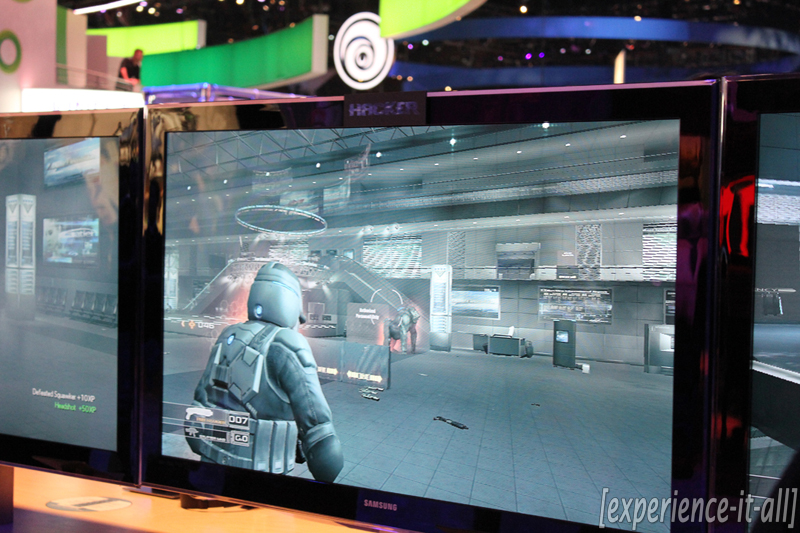
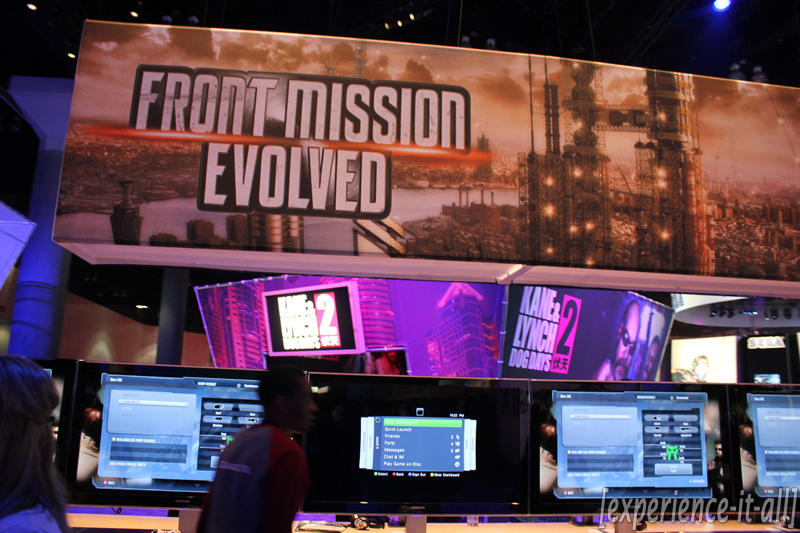
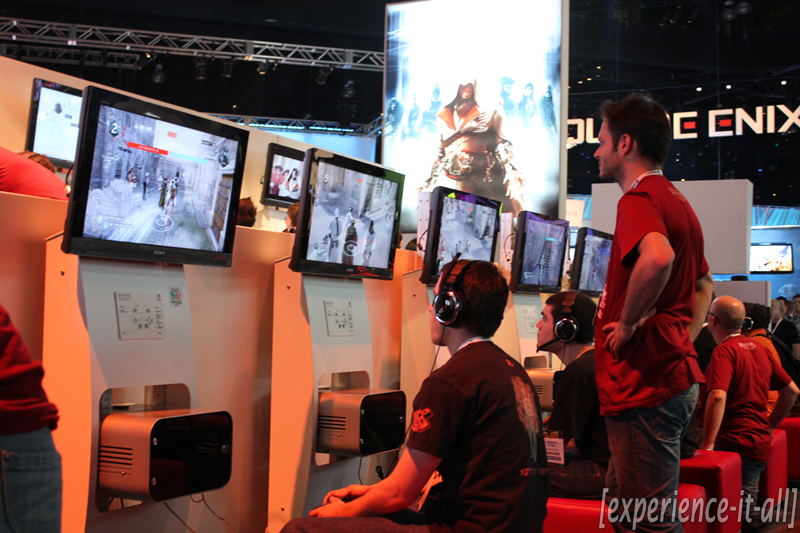
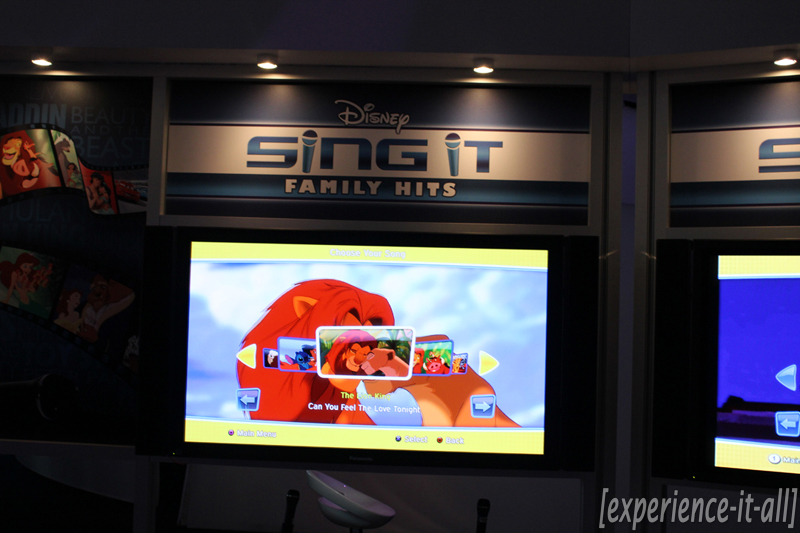
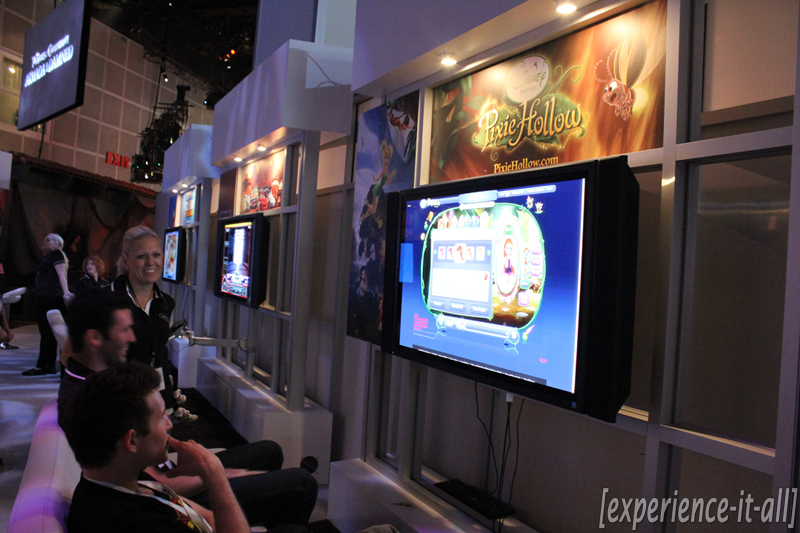
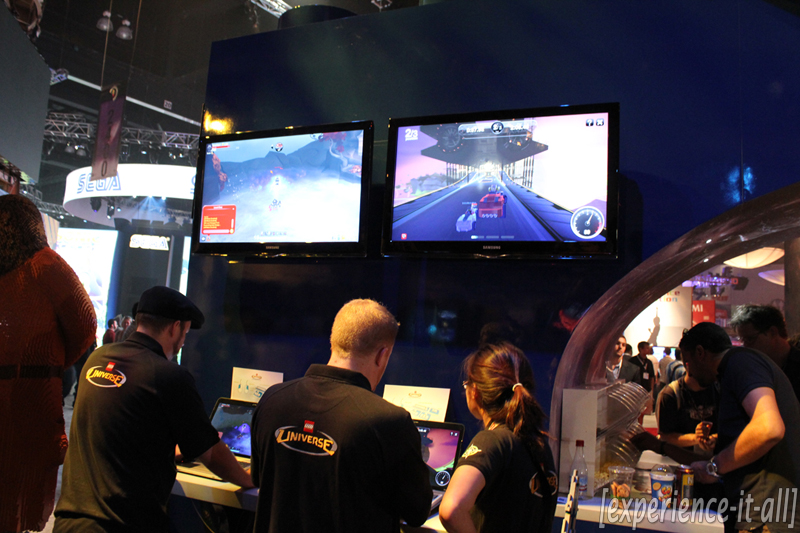
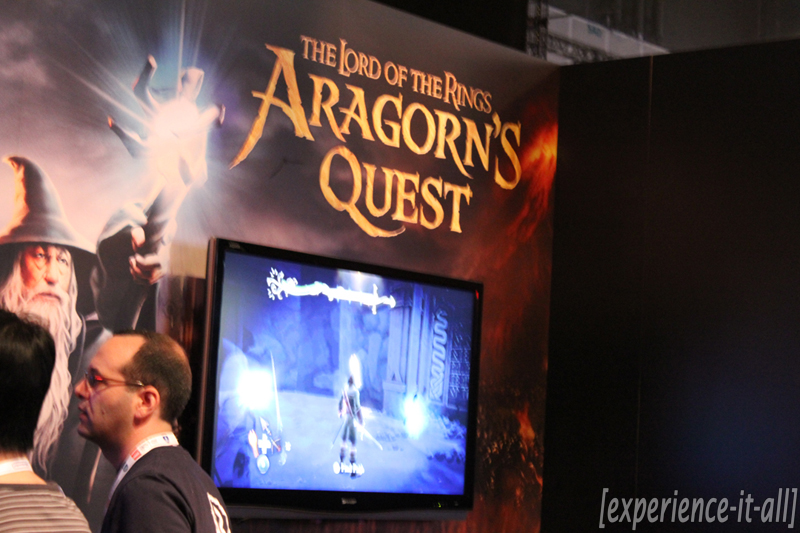
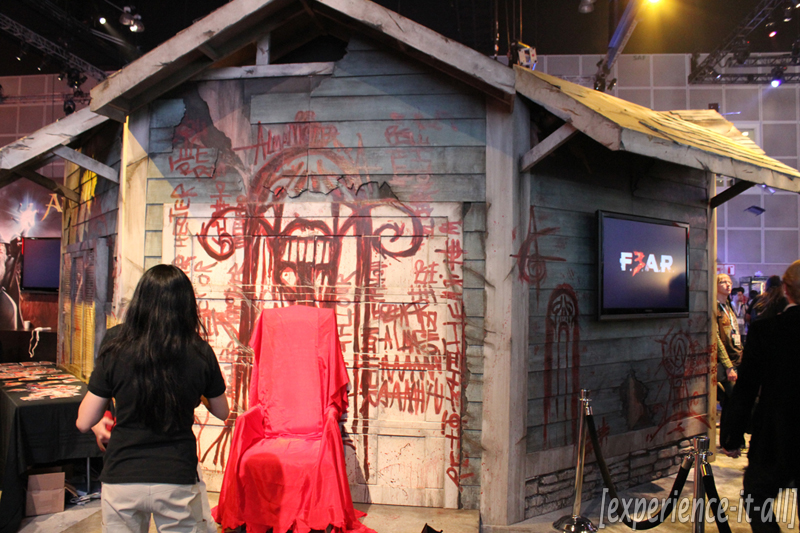
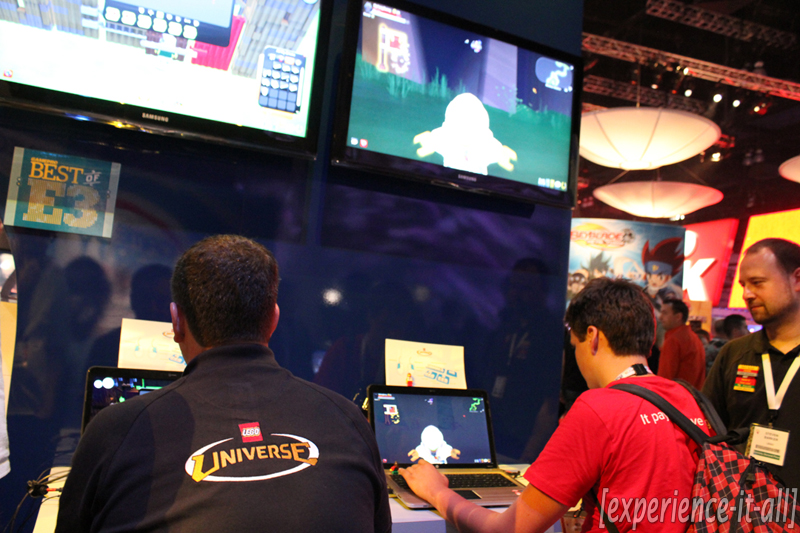
And that marks the end of the interview + hands-on content. Now it’s time for the booth tours! On the last day of E3 2010 I decided to hit record on my camcorder and capture the highlights of almost every booth on the show floor. I did it so you can get a real sense of how each booth was set up and what it all looked like from the perspective of an attendee. Sure E3 is all about the games, but game studios put a ton of effort into making extravagant booths to attract those in attendance; the booths (and requisite booth babes) play a big part in making E3, well, what it has come to be. No, there’s nothing like actually beingthere and speaking with all the developers and playing all the games. But the following videos and pictures will bring you pretty darn close to the action.
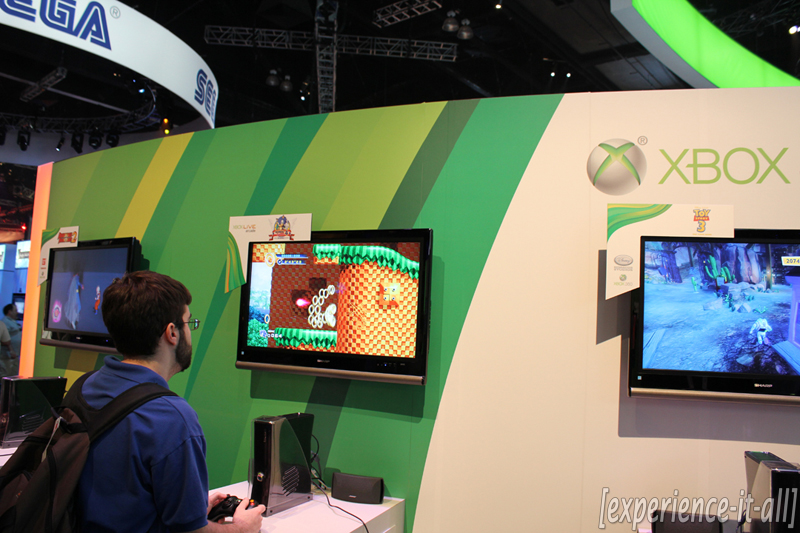
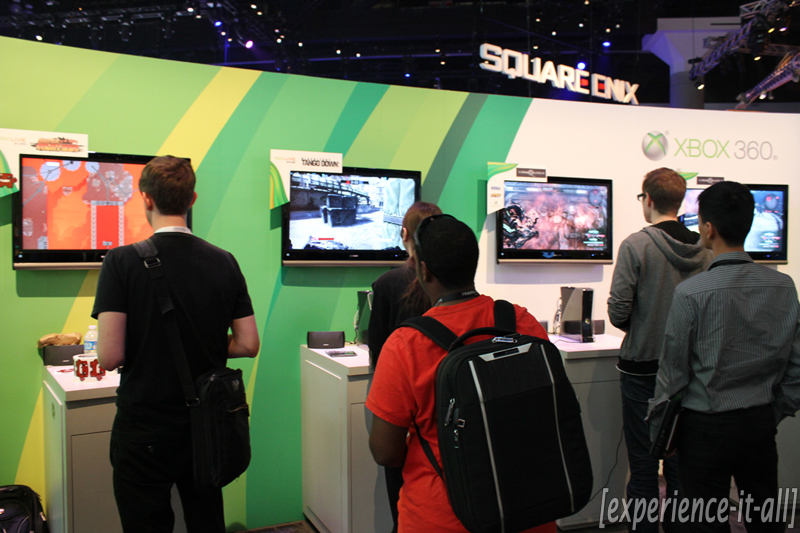
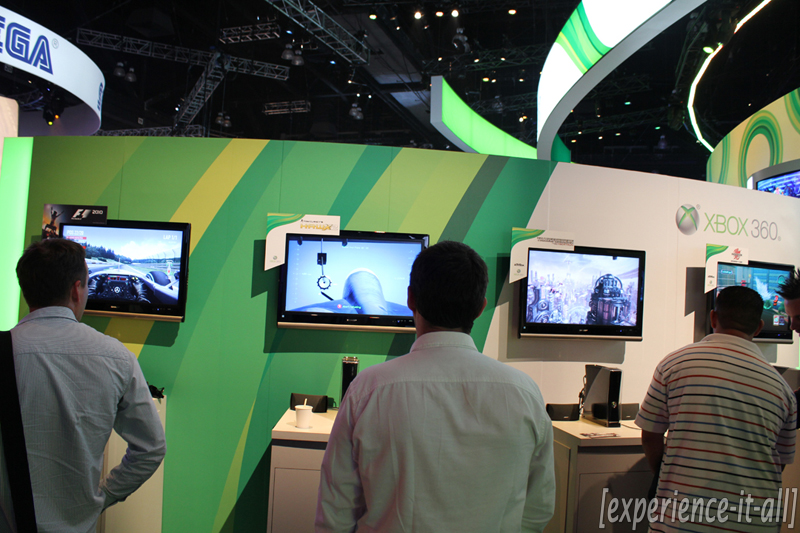
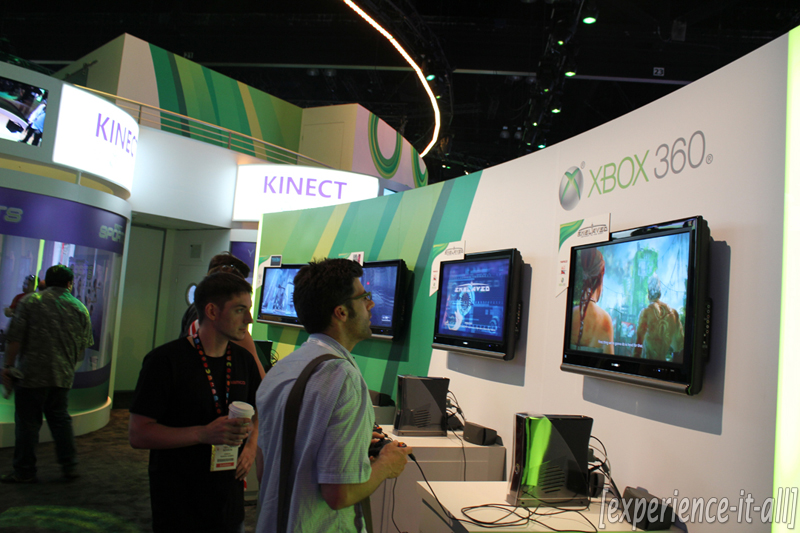
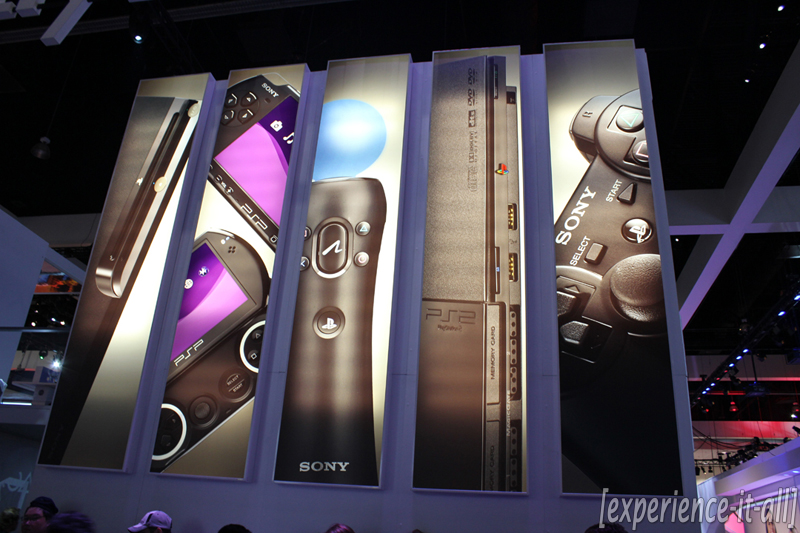
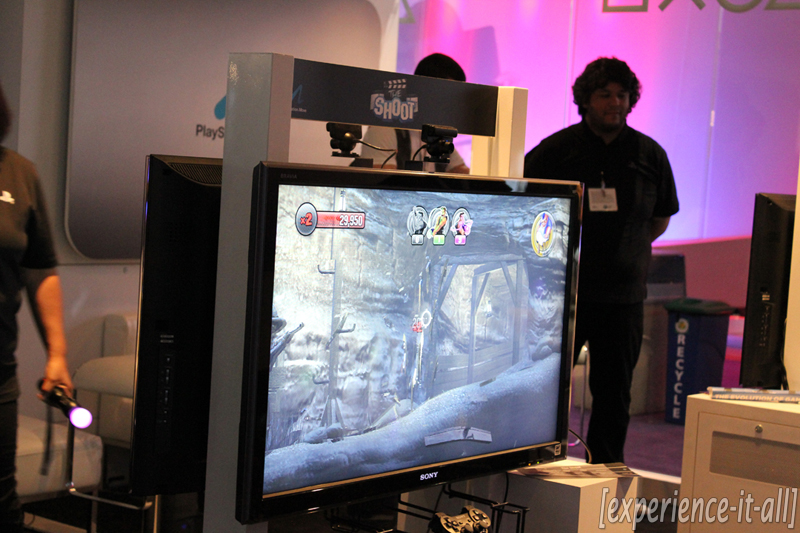
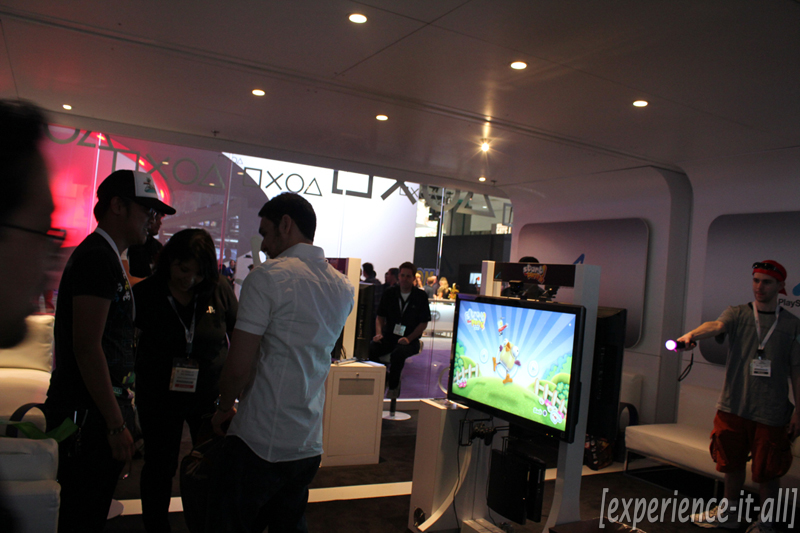
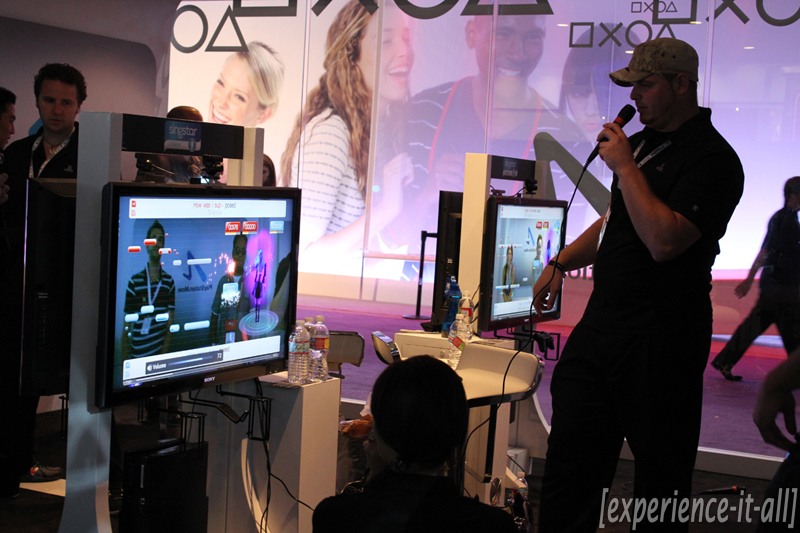
Here’s how the booth tour posts are set up. You’ll find an embedded YouTube video at the top; this video will contain 2-3 booth tours. Below you will see various picture galleries separated by company. Next to each company’s name I hand-picked the most popular games featured at that booth. And that’s it, really. So go ahead and dive into this first one here–it’s Microsoft and Sony, two of the biggest booths on campus.
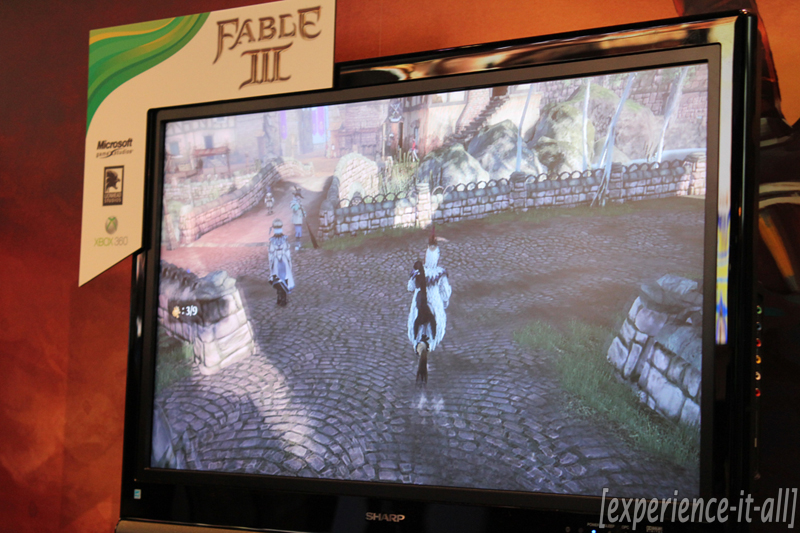
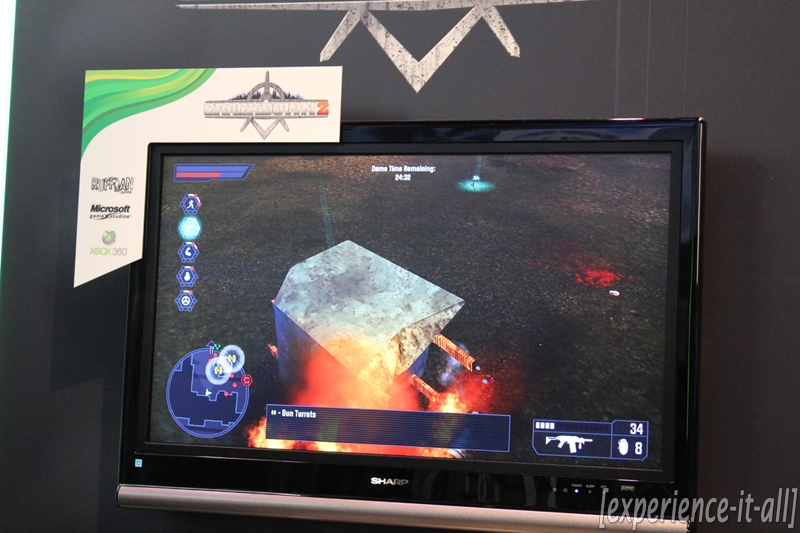
Microsoft: Kinect games,Fable III, Crackdown 2, Halo: Reach, Gears of War 3
OnLive is a gaming on-demand cloud-based service that’s able to stream video game titles from massive servers around the U.S. straight into your home. Man is that a packed sentence. Let me break it down for you. OnLive has three data centers in the country (east coast, central, and west coast) that house large servers; these servers act as hosts to a bunch of video games. If you sign up for the OnLive service and become a member of the community, the servers will pump video game content from the data center nearest you to your Internet-enabled PC or Mac. Again, it’s essentially gaming on-demand. After installing a plugin in your browser, you can launch OnLive and gain access to a growing library of video game titles. It’s that simple, really.
The OnLive interface is neat. There’s a game marketplace that allows you to choose from a wide selection of games. With a single click you can play a game; or you can find out more about the game before you dive in by watching game previews & trailers. You can even watch other OnLive members play the selected game in real time. The interface drags you into the action of other players, and this is a great way to get a glimpse of a game’s visuals and game style. Besides strictly being there for on-demand gaming, the service hopes to form a community of gamers with features like profiles, friends lists, and brag clips (you can record gameplay and share these moments with other OnLive members).
What’s most exciting about the OnLive service is that it does away with the need for over-the-top and expensive hardware requirements for games. Crysis, a game that is known to be hardware intensive, will play smoothly and look great playing off an old Macbook or PC laptop. The secret formula is OnLive’s proprietary video compression chips that pump out the games from the servers over the Internet and to your computer. As long as you have a 4-5 Mbps Internet connection you will have no problem playing what used to be hardware intensive games in HD (a 1.5 Mbps connection is recommended for SD quality). I really want to hit this point home as well: Since this is gaming on-demand, the service brings together games from all major game consoles (Xbox, PlayStation, PC) and enables you to play them right on your PC or Mac. No need for proprietary hardware and cables. All you need is an Internet connection, a computer, and a keyboard and/or Xbox-type USB controller.
There’s gotta be some lag, you’re thinking to yourself. I was skeptical at first, too. But I gotta say, after playing Just Cause 2 off an old Macbook over the OnLive service, I did not notice the slightest bit of latency between my controller button-mashing and the on-screen action. It truly felt as if I was playing the game locally off a computer or video games console. And what’s fascinating is that Just Cause 2 was running off a server more than 500 miles away in Santa Clara! Though there likely is some latency if you want to get all technical, I honestly did not pick up on it during my brief session of gameplay. I was told that as long as you are within a 1000 mile radius of an OnLive data center you should not experience noticeable latency.
Now let’s talk pricing and availability. OnLive is available to use today (in fact it was turned on a day after my interview took place). You sign up for the service at their website. The “OnLive Founding Members Program” is backed by AT&T and it offers the first year of use for free (!), followed by a $4.95/month fee for the second year. There’s no contract requirement which means if there’s a month you don’t feel like using the service just don’t for it that month. Right now it looks like the company is slowly opening the gates to the OnLive community; if you want to sign up to play you have to sit on a waiting list. Bummer, I know, but the service is still in its infancy and I’m sure the company does not want to overload its servers this early in the game.
And what about software partners? You will not be disappointed on this front. Just announced was partnerships with Sega, Capcom, Konami, and Square Enix. Popular publishers like EA, Ubisoft, THQ, Warner Bros. Interactive, and Disney Interactive are also bringing their titles to the service as well. I’m told new publishers are jumping on the OnLive bandwagon all the time, and this is great news for gamers.
Beside the addition of developer support, OnLive will be adding their MicroConsole to the mix later this year. Basically it’s a small (and I’m told inexpensive) piece of hardware that will allow members to play the streaming games on their HDTVs. It will support up to four wireless controllers, multiple Bluetooth headsets, and it packs two USB ports for wired controllers and keyboards.
Is OnLive the future of gaming? Though it’s too early to tell, you can definitely see the potential it brings to the table. With OnLive there’s no need for high-end graphics cards and to run to a store to purchase a game disc. No longer do you have to worry about upgrading hardware to play the latest and greatest games. If you’ve got the proper Internet connection and live within range of a data center, you are golden. I’ve experience it with my own two eyes and thumbs–the latency was non-existent on the show floor. Though my skepticism has been lowered down a notch, I’m still going to wait for a final verdict after I give the service a try on my own computer at home. Even if OnLive doesn’t catch on and become widely popular, replace game consoles and eliminate the graphics cards arms race, you can bet everyone from industry leaders to gamers will turn to this service as an example of how the next phase of video game distribution was imagined and first put into place.
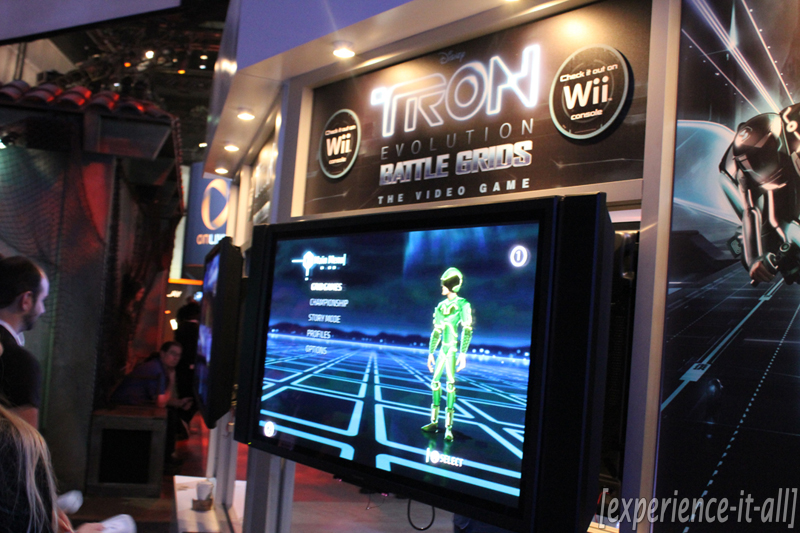
Tron is back, people. Coming soon to a theatre and video game console near you are all new experiences from the famed Tron universe. Tron: Evolution bridges the gap between the original Tron movie (1982) and the upcoming Tron: Legacy flick set to hit theatres later this year on December 17. In the game you play as a system monitor who investigates “mysterious goings-on” that’s happening in the digital Tron universe. The controls are best described by comparing them to Mirror’s Edge gameplay. You are a parkour champion and you move through the levels by completing wall jumps, among other high-flying, fast and fluid techniques. These are known as “mobility moves”. In combination with “combat moves” you will successfully defeat incoming enemies and move on through the game. Combat moves include typical melee fight style with punching and kicking, but you can also climb a wall and pounce your enemies from above. You wield a disc that can be thrown at top speeds towards enemies to knock them out. And if you have a few seconds to spare you can charge up your attacks and this results in a more powerful and effective combat move. In the demo above you can see all the different types of combo moves you can perform (there’s disc-disc-melee, jump-jump-disc, disc-jump-melee, and so on). Another neat gameplay features involves how you pick up health. Through the various environments there are glowing white lines that run along the walls. You can jump and vault along these lines to increase your health and energy meters. This encourages you to use mobility moves and always be aware of your surroundings.
And this wouldn’t be a Tron game without the use of Light Cycles. In the demo I hopped onto a Light Cycle and was being hunted down by enemies on their respective Cycles. These Cycles beat out the ones played in the original Tron arcade game; thanks to a full physics model the vehicles don’t just turn at 90 degree angles. Controls to accelerate and brake are simple. You can also throw your discs to hit enemies off their rides as you speed past them. This part of them demo was quite fun. As you’re trying to escape from your enemies the world is falling apart and collapsing around you. It’s you vs. the enemies vs. the environment. The only fault I have with the Cycles is that they’re not fast enough. If the devs bump up the speed this part of the game will be a whole lot more exhilarating.
A couple other odds and ends: Whatever you earn in the game can be used when you switch over to multiplayer, and vise-versa. When I asked about PlayStation Move support I was told “there’s still some issues to be resolved in that department.” We all know the movie will release in 3D, but what about that game? The dev I spoke to said “it would be fantastic if we could get the game in 3D” and he seemed a whole more positive about 3D support than Move capability. So we shall wait and see…
Overall Tron: Evolution is panning out to be one of the better game to movie to game adaptations I’ve seen in some time. The visuals are slick, the gameplay is fluid, and story should excite Tron fans to no end. Look for its release to coincide with the movie later this year.
A while back I reported on a new Wii title called Epic Mickey. After playing the expansive demo at E3 I am so happy to report back that Epic Mickey is everything I hoped it would be. In fact, it was my favorite game of the show! The visuals, the controls, the characters, and the environments all blend together to make an exciting Disney experience with our good pal Mickey Mouse at the helm.
It’s hard to pinpoint exactly what type of game Epic Mickey really is. It takes cues from platformers, role-playing games, and third-person shooters, even. It meshes 2D and 3D gaming to produce stunning color and black/white visuals that stem from classic Disney history. The first part of the demo took us to Wasteland, a place where old, washed up, and forgotten Disney characters hang out. Characters like the pirates Smee from Peter Pan and Scurvy Pat are there to give you tasks to perform. In a beautiful cut scene that features 2D paper animation, Smee is crying because all of the pirates are being turned into robot monsters. It is up to Mickey to save the pirates from their demise. At the Wasteland I was instructed by Tiki Sam (he looks sort of like Goofy) to find three masks that are hidden throughout the area. There is a lot of trading and bartering that goes on between all these different characters; one decision leads to another and this all eventually lands Mickey in the appropriate situation to help stop the machine from destroying the pirates. Your decisions to either help or ignore the characters around you will affect the outcome of the game.
The game is split into three different areas: quests, transitions, and actions. Wasteland is a quest area; it’s a place where interact with other characters to complete certain tasks. Transition areas take place in-between quest and action areas and they usually contain special items and collectibles that will help Mickey elsewhere in the game. The transition area I jumped into was a movie reel and it transported me to a 2.5D sidescroller based on Mickey’s first appearance in 1928’s Steamboat Willy black-and-white cartoon. There are about 40 of these sidescrolling adventures in the game; they are all based on classic Disney cartoons. Playing through Steamboat Willy was a ton of fun. I am really looking forward to discovering all the other transition areas in the game. There’s nothing like classic Disney lore.
At the end of the Steamboat Willy level I jumped into another movie reel that brought me to a new area in the game called Skull Island. This is an action area where Mickey will run into enemies to defeat and conquer and it’s the place where I’ll find a way to stop the machine from turning the pirates into robots. My first mission is to find three anchors to save Smee’s ship from sinking into the ocean. There’s no better time to talk about controls then right now. In the game Mickey wields a magic paintbrush. Paint is used to create objects in the environment. If you stumble upon an area and you’re stuck, more than likely a spray of paint will reveal a bridge that connects the gap to crossover. Paint thinner is used to destroy objects around you. It can also be a helpful tool to find hidden objects that reside inside rocks or trees. Throughout the game there are clues guised under dark silhouette shapes; if you keep your eyes open for these subtle hints you can use your brush to uncover what’s there. When it comes to enemy interaction you have one of two options. You can use paint thinner to erase them or paint to strategically turn them into friendlies who will fight for you. Mickey can also collect objects called “sketches”. In the demo I picked up a TV sketch; at one point during the Skull Island sequence the TV sketch was used to distract an enemy. Mickey literally places a TV in front of an enemy and while he was distracted by a scene from the original Steamboat Willy cartoon I picked up a missing anchor piece. Humorous, fun, and effective.
At its core, Epic Mickey is a true-to-form roleplaying game where your decisions will effect the way other in-game characters perceive you. If you use paint thinner to erase elements from the environment around you more than you use paint to create, characters will take notice. In this case, they will be less friendly and willing to help you solve missions. In fact, a little green sprite named Terp follows you around and lets you know what type of “play style” you’re currently engaged in (too much thinner or paint or a mix of both). And since your decisions alter the game, you can literally play through it numerous way and every time will play out differently. With intuitive controls, an engaging story with fun and challenging missions, and spectacular visuals, expect Epic Mickey to take over your living room when it release this holiday season exclusivel for Wii. The game truly is a sight to behold. And and if you’re a fan of Walt Disney creations you will certainly not be disappointed.
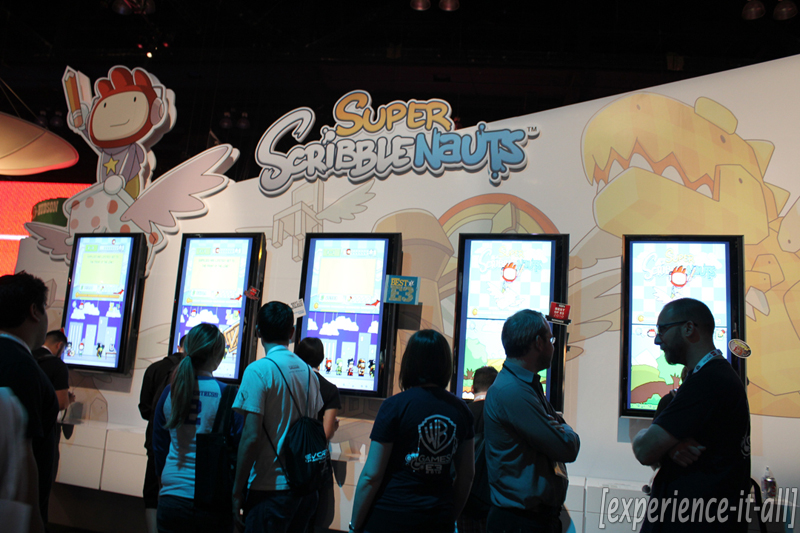
The concept of the original Scribblenauts that debuted at E3 2009 really blew my mind. It was a game that allowed you to type whatever you wanted and poof! the object would appear on-screen ready to be interacted with. Due to a number of control issues the game did not successfully execute where it should have. Super Scribblenauts leaps ahead of its predecessor with improved controls, adjectives support, and better levels. The most exciting controls update allows you to manipulate Maxwell’s position (including walking and jumping) on-screen with the D-pad and action buttons; you are no longer forced to use the stylus and touchscreen to make him move. The addition of adjectives greatly increases the number of objects that can be spawned into the world. In the first game you could easily produce a “pogo stick”. In the sequel you now spawn an “angry armed metal pogo stick.” (That’s right–you can assign more than one adjective to an object.) As you can see in the demo above, the angry pogo stick will annoy and bump into you. By adding a “protective metal box” to the environment, it will protect you from the pogo stick. So in other words, objects can enhanced with artificial intelligence by adding an adjective before its name. With the addition of thousands of adjectives, the game now supports over a whopping trillion different objects you can spawn. The only restrictions you have in spawning an object are inappropriate words and the 100 character limit.
With over 120 new puzzle-oriented levels to play through, tighter controls, and the ability to make all kinds of objects with adjectives, Super Scribblenauts will likely fulfill that promise of bringing unique gameplay on a portable platform when it releases later this fall for Nintendo DS.
Let’s start with Kinect Adventures!, shall we? This Kinect game includes a bunch of mini-games, and I got to step into two of them. “River Rush” puts you and a second player inside a raft that you must navigate through heavy rapids. Controls are simple: lean left and right to guide the raft and watch out for obstacles like big rocks; lean forward to make the raft go faster; leap into the air with your partner to make the raft jump off ramps to collect tokens for extra points. During the demonstration, the Microsoft rep instructed us to side-step left and right to steer the raft; I’m told it can be navigated either way. The second “adventure” I played was a mine cart obstacle course. While you’re traveling at a steady speed atop a mine cart you must jump (for speed), duck, and side-step to watch out for obstacles like metal padded bars. Collect tokens along the way by configuring your body into various positions.
Kinect Adventures! also includes a “camera moments” that pop up a number of times during the mini-games. A small camera icon alerts you when the game is ready to snap a photo of you in action. At the end of each game you are shown a quick montage of your jumping and spinning motions during peak moments of gameplay. They come complete with captions that relate to the action; if it catches a big jump it might say “impressive air”. Think of it like the pictures that are taken at theme parks during big drops on a coaster. Once the photos are saved, you have the option to share them with friends via email or Facebook. That’s right–now you can embarrass yourself in new ways!
Next up is Kinect Sports. This game is a Wii Sports knockoff for sure, but is it a worthy contender? It packs six sports in total–bowling, ping pong, volleyball, boxing, soccer, and track & field. Within the track & field section I did some running-and-hurdling. Ready for the controls? Run in place to make your avatar go and jump to avoid the obstacle beams. The fast your run in place, the faster your avatar will run on-screen. It’s like using the NES Power Pad but without the pad! This mini-game was a lot of fun, though it was frustrating at times. I had some trouble leaping over the obstacles; it’s all about the timing and I just didn’t catch on. My partner, on the other hand, managed to make almost every jump. Guess I need some practice. Besides that minor issue, I was whole-heartedly satisfied with my experience because it resulted in a great workout! By the end of the race my partner and I were almost out of breath and on the verge of sweating (it was hot in the Microsoft cube!). The results screen shows you a sped up video replay of your running and jumping action and then shows your avatars too with some Chariots of Fire playing in the background. Since I only got to the play a track-and-field game it would not be appropriate to say Kinect Sports is better or worse than Wii Sports. The verdict will have to wait until we all get our hands on the game this fall.