500 tiny compasses + rare earth magnets + a glass tabletop = coaster magic.
Instructables shows you step-by-step how it’s made, if you’re so inclined.
[Via Instructables; Gizmodo]
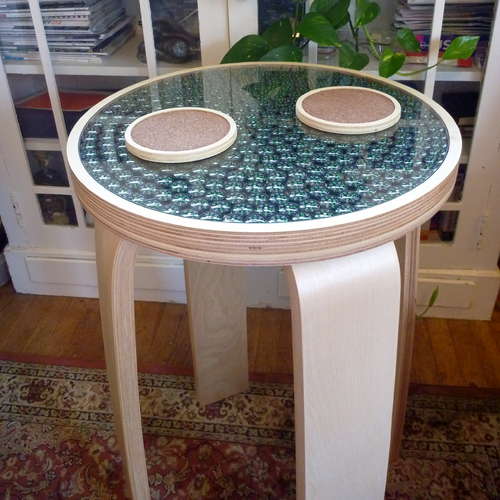
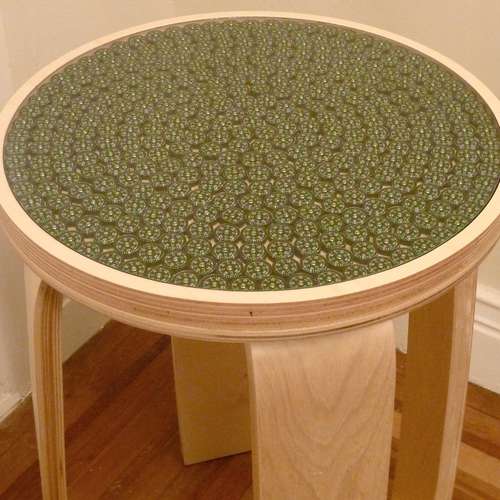
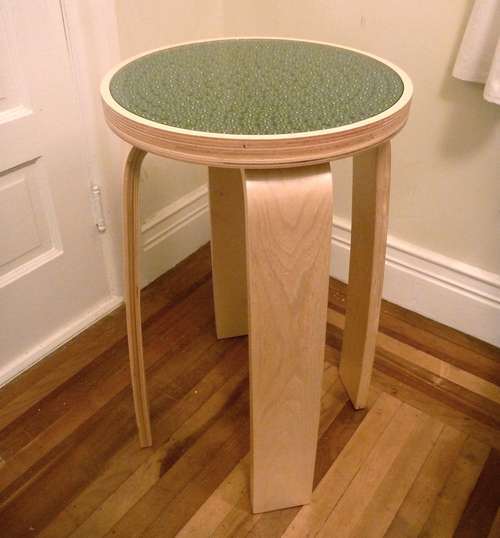
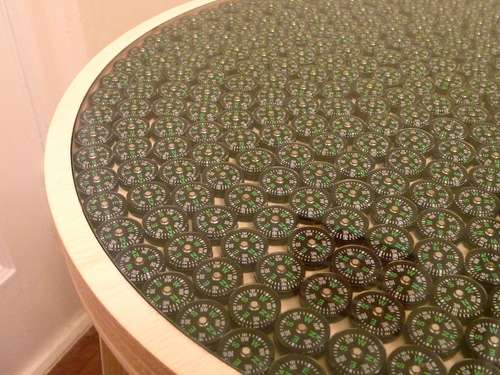
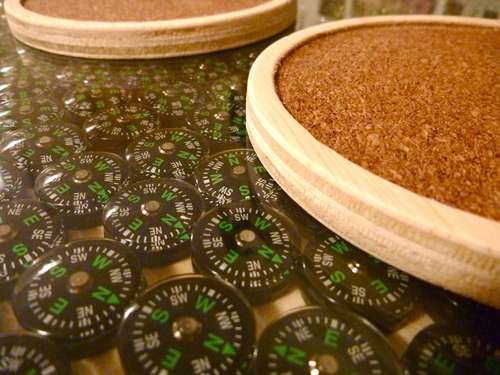
500 tiny compasses + rare earth magnets + a glass tabletop = coaster magic.
Instructables shows you step-by-step how it’s made, if you’re so inclined.
[Via Instructables; Gizmodo]
Carnegie Mellon University and Microsoft have teamed together to create a different type of user input system. It’s aptly called Skinput and here’s how it works:
We present Skinput, a technology that appropriates the human body for acoustic transmission, allowing the skin to be used as a finger input surface. In particular, we resolve the location of finger taps on the arm and hand by analyzing mechanical vibrations that propagate through the body. We collect these signals using a novel array of sensors worn as an armband. This approach provides an always-available, naturally-portable, and on-body interactive surface.
Veddy veddy interesting. Potential applications for such a daring input system include cell phone calls, video games, mp3 players. Is it practical? I’m not so sure. But the idea of having a hierarchical menu system accessible on your forearm and manipulated by the touch of your finger and its vibrations just sounds and looks (see the video above) so cool!
[Via NewScientist; Gizmodo]
Microsoft’s Surface table is fairly large and very expensive. And those are two factors that don’t mesh well with the general consuming public. Microsoft gets that, so they’ve gone ahead and created a prototype version of their multitouch table called Mobile Surface. Like its older brethren, Mobile Surface uses a projector/camera combo that allows you to interact with on-screen images. Difference here is that the image projection can be displayed on any surface (making it portable) and it allows for in-air manipulation. For example, as seen in the video above, you can play the drums without physically touching the tabletop. Mobile Surface links up to a secondary device, like a cell phone or laptop, to indicate what you’re interacting with. Pretty neat if you ask me. Currently Mobile Surface is a Microsoft Research project and Microsoft did not comment on a potential mainstream release.
[Via Pocketlint; Engadget]
Turtles, Senator Scott Brown, Super Bowl, and jobs, jobs, jobs–all auto-tuned for our pleasure. Enjoy.
Finally, a decent parody of those insanely annoying “I’m a PC and Windows 7 was my idea” commercials. College Humor-approved. Slightly NSFW.
[Via CollegeHumor]
Holographic Drumkit and Turntables test. Featuring Will Clark (drums), JFB (turntables), Beardyman (the heads).
From the guys who brought you this head-spinning insanity.
“Gypsy” is the next single off Shakira’s highly acclaimed album She Wolf. It features tennis player Rafael Nadal. I would let her take off my clothes…

GORDON GEKKO IS BACK.
Wall Street 2 takes place 26 years after the conclusion of the 1987 Academy Award-winning Wall Street; both are directed by Oliver Stone. It stars Michael Douglas, Shia LaBeouf, Josh Brolin, and Carey Mulligan. SPOILER: Charlie Sheen is rumored to make a cameo. The sequel hits theatres April 21. Watch the trailer below. Do it.
[Via TrailerAddict]
This video of NASA Johnson Space Center’s “Project M” depicts a Robonaut-based, tele-operated mission to the Moon – one that JSC claims could be accomplished in 1,000 days once the go-ahead was given.
The background music alone has me pumped for sending exploratory robots into space. 1,000 days, eh? If we can’t agree on sending more humans to the moon, why not send robots controlled by humans on Earth in motion-capture suits? Let’s do it!
Curious Displays, designed by Julia Yu Tsao, is a way-off-into-the-future conceptual idea. Like way into the future. Basically, hundreds of tiny blocks scatter your surroundings and bunch together to form various things. For example, the blocks can come together to form a screen of sorts to watch a movie, or they can collectively shape into an arrow and point to the location of your missing keys. Tsao describes the project as such:
The project explores our relationship with devices and technology by examining the multi-dimensionality of communication and the complexity of social behavior and interaction. In its essence, the project functions as a piece of design fiction, considering the fluctuating nature of our present engagement with media technology and providing futurist imaginings of other ways of being. ..
Curious Displays is a product proposal for a new platform for display technology. Instead of a fixed form factor screen, the display surface is instead broken up into hundreds of ½ inch display blocks. Each block operates independently as a self-contained unit, and has full mobility, allowing movement across any physical surface. The blocks operate independently of one another, but are aware of the position and role relative to the rest of the system. With this awareness, the blocks are able to coordinate with the other blocks to reconfigure their positioning to form larger display surfaces and forms depending on purpose and function. In this way, the blocks become a physical embodiment of digital media, and act as a vehicle for the physical manifestation of what typically exists only in the virtual space of the screen.
It’s all a little too far out there for my tastes, but an interesting topic to undertake nonetheless.
[Via CuriousDisplays; Vimeo; BoingBoing; Gizmodo]
So this is what Wired is going to look like on the iPad. Pretty cool, huh? Wired teamed up with Adobe to create Wired Reader, a digital version of the real-life magazine. The UI looks stunning and the back-and-forth between pages, images, and video is very fluid. It runs on top of Adobe’s AIR app, allowing developers to easily convert the Reader to run on other mobile devices and even the PC or Mac. Will the iPad revolutionize the print media industry? Hard evidence like this points towards a resounding “yes.”
[Via Wired]
Finally, the Nintendo DSi’s camera is being put to exciting use. An upcoming Japanese-only game called Rittai Kakushi e Attakoreda will utilize the DSi’s (inner) camera and motion tracking software to follow your eyes and create a 3D illusion that you are looking behind or in front of certain objects in the virtual world. The tech being used here is not so different from Johnny Chung Lee’s Wii head-tracking experiments. Watch the demo above and it’ll all make sense. Magical, isn’t it?
[Via BoingBoing; Gizmodo; Nintendo Japan]