Obscura Digital has created a pool table that uses a projection system and some sensors that allow for a fun experience. Check out said experience in the video above. The Cuelight Pool Table can be used at the Hard Rock Hotel & Casino in Las Vegas and Esquire’s SoHo “Ultimate Bachelor Pad.”
If you are at all interested in this Personal Mobility Device, read on for the details, straight from Honda.
“Honda has developed a new personal mobility technology, U3-X. It is a compact experimental device that fits comfortably between the riders legs, to provide free movement in all directions just as in human walking forward, backward, side-to-side, and diagonally. Honda will continue research and development of the device including experiments in a real-world environment to verify the practicality of the device.
This new personal mobility device makes it possible to adjust speed and move, turn and stop in all directions when the rider leans the upper body to shift body weight. This was achieved through application of advanced technologies including Hondas balance control technology, which was developed through the robotics research of ASIMO, Hondas bipedal humanoid robot, and the worlds first* omni-directional driving wheel system (Honda Omni Traction Drive System, or HOT Drive System), which enables movement in all directions, including not only forward and backward, but also directly to the right and left and diagonally. In addition, this compact size and one-wheel-drive personal mobility device was designed to be friendly to the user and people around it by making it easier for the rider to reach the ground from the footrest and placing the rider on roughly the same eye level as other people or pedestrians.”
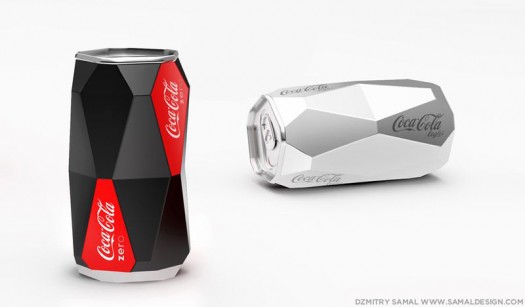
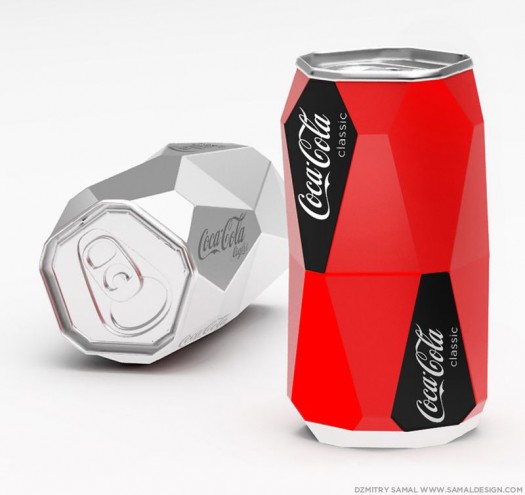
According to PSFK.com: “Rather than use the traditional cold forming manufacturing process all cans undergo today, Samal’s concept makes use of a forming process called impact extrusion in which aluminum is pressed at a high velocity into a mold. Besides having a unique look, the faceted sides could make the can easier to grip and would prevent the can from rolling when placed on its side.”
This Sunday at the Emmys TV Guide caught up with Bret McKenzie and Jemaine Clement of Flight of the Conchords fame. You can see and hear with your own eyes and ears, respectively, the brilliantly hilarious duo confirm that three of their songs from the hit HBO series will make their way to Rock Band sometime soon. This is very exciting news for all FOTC fans out there.
This calls for one thing, and one thing only…BRET’S ANGRY DANCE. Just do it, it relieves so much stress.
To decorate the office space of Büro Hirzberger in Vienna Strukt realised a digital wallpaper that illuminates the walls. In this self-initated project Strukt was given complete creative freedom by the client, and developed a system to project video and realtime content undistorted onto any surface.
The basic idea was to light up the black and white striped office wall by mapping the architecture with multitple projectors. The program developed by Strukt is scripted in vvvv and is scaleable to any number of projectors and any architectural shape. Several different visualisations have been realised already, amongst it a Pac Man animation as well as moving stripes, and more are in development. The content could also be made interactive, reacting to people passing the ground-floor offices.
Though the Xbox 360 Elite recently saw a dramatic price drop (from $399 to $299), it seems like Microsoft was not fully content with this sweet spot. Starting today, the Xbox 360 Elite console will be sold for $299 with a $50 mail-in rebate. So that’s $249 for the best next-gen console on the market; what a deal! This mail-in rebate offer runs through October 5; Microsoft has not specified what will happen to the standard price of the console after that date. Looks like Christmas may be coming early for some folks; get on this!
And the Google doodles have led up to this, a celebration of what would have been author H.G. Wells’ 146th birthday. From the “unexplained phenomena” and the mysterious phrase “all your “O” belong to us,” to the “crop circles,” and now to a scene from H.G. Wells’ famous story War of the Worlds, Google has played us all. Was the Google-plex infiltrated by aliens from another planet? Was Google planning to unveil a new logo or a new product or service? Were they attempting to show the general public and corporations alike the power of the Google doodle and how its changes can support advertisements for movies and so on? NOPE.
Google has officially stated today in a blog post that all the mysterious doodles have led to up to this one event, the birthday of H.G. Wells, and all of the doodles relate to his War of the Worlds. “Inspiration for innovation in technology and design can come from lots of places; we wanted to celebrate H.G. Wells as an author who encouraged fantastical thinking about what is possible, on this planet and beyond. And maybe have some fun while we were doing it.” Yeah, by fun you mean having bloggers like me and crazy alien theorists like the rest of us postulate for days on end thinking about a possible explanation. (Although things started to become clear with the second doodle; the coordinates Google posted on their Twitter page pointed to Horsell Commons, the initial place where the aliens landed in Wells’ novel.) Google puts a cap on this solved mystery and leaves us with this: “The invasion of the logo by alien crafts and pods makes our series complete, but you’ll have to read the book to find out how Wells’ story really ends.”
Well played Google, well played.
Update: It still doesn’t explain Google’s Street View image of these UFOs flying over London! Muhahah….
Agnelli: “Reading a newspaper, I saw a picture of birds on the electric wires. I cut out the photo and decided to make a song, using the exact location of the birds as notes (no Photoshop edit). I knew it wasn’t the most original idea in the universe. I was just curious to hear what melody the birds were creating.”
Mr. Agnelli, this is quite an original idea, and I am very impressed by your observation and musical ability. To see the birds in such a fascinating pattern like that of musical notes, transform their locations into a melody, and share it with the world is a very cool achievement, to say the least. Readers, enjoy the creativity and splendor that is in the video above.
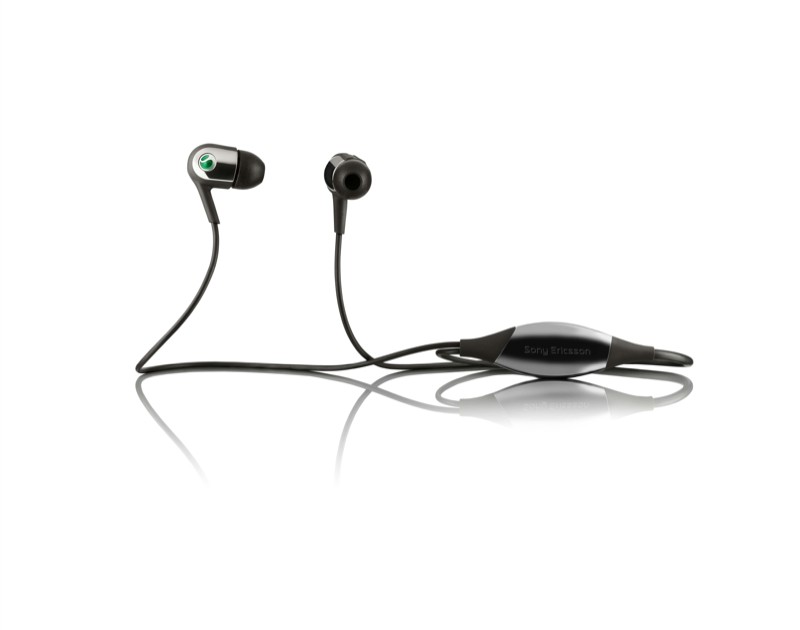
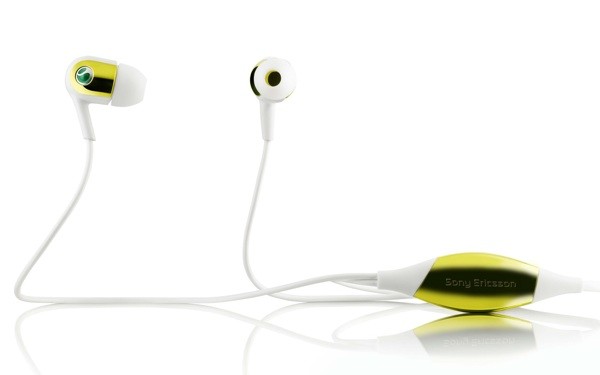
The Sony Ericsson MH907 earbuds rightly claim to be the first “motion activiated” headphones that feature SE’s “SensMe Control.” What does it do? When you place the earbuds into your ears, your music starts playing, no button mashing required. If you take a bud out of one ear, the music pauses, either to answer a call or to carry on conversation with a nearby pal. How does this work? The bud “requires [a] conductive surface to activate the controls.” Basically, when the buds touch the surface of your ear they know to start playing the tunes. When they are taken out from your ear they “sense” the removal and pause the music. So you won’t have any problems shoving the ‘phones in your pocket; they won’t turn on becuase they are not hitting a conductive surface.
Engadget has received this claficiation from SE: “SE has further clarified that the technology is capacitive in nature. In other words, removing an ear bud isn’t breaking the flow of current between buds (and across your noodle) — it’s destroying the dynamic capacitor formed by the touch of human skin.” Although this tech is not going to change things “forever” (as Sony Ericsson put it before the today’s unveil) it should make some impact in the market. Let’s wait and see if competitors try to up the ante.
The MH907 is available this week for “most Sony Ericsson phones with a fast port connector” for 39 euros, or roughly 60 US dollars.
It’s hard enough you aren’t actually holding mallets and playing with a real puck. Add in some seisure-inducing flashing lights and you’ve got one heck of a challenge here. See for yourself in the video above.
Scientists from the University of Washington’s Graphics and Imaging Laboratory, with the help of over 150,000 Flickr users, managed to create 3D digital models of three different cities. According to PopSci.com, “each video includes clusters of small diamond shapes, which represent each photographer and his or her vantage point. .. The team built a new algorithm that proceeds in two steps — first, by matching the photos by what they had in common, puzzle-style, and then by determining the scene and each photographer’s pose.” One of the scientists, Steve Seitz: “This is one of the main intellectual challenges here. We want to see how much of the city can be reconstructed from people’s tourist photos.”
Their next task: to create a 3D rendering of an entire city using at least one million photographs. So keep taking pictures people, and upload them to your Flickr accounts. Check out more 3D renderings the team is working on at their YouTube page. Cool stuff, huh?