Category Archives: Technology

Google TV ready for primetime (part 2): Sony Internet TV & Blu-ray Disc Player

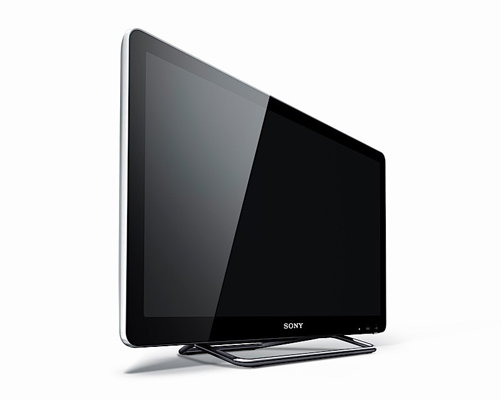
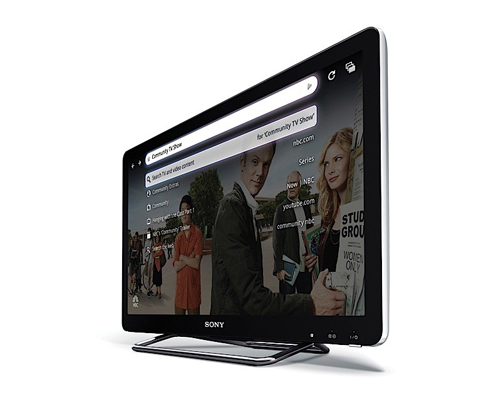
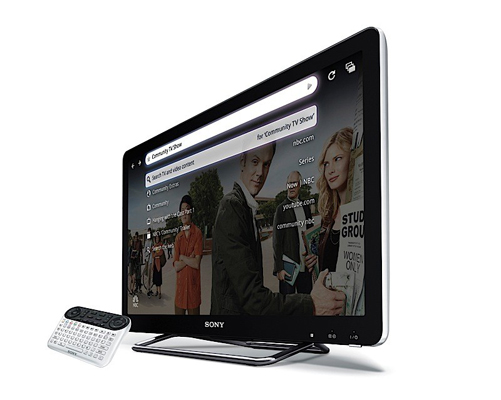
Yesterday Sony held their own event to reveal their Google TV initiative.  Unlike Logitech’s companion box (the Revue), Sony is incorporating Google TV into a new line of HDTVs and a Blu-ray player.  The Google TV experience on the new Sony TVs and BD player is exactly the same as it is on Logitech’s Revue, so I will spare you another Google TV explanation and jump right to the hardware announcements.

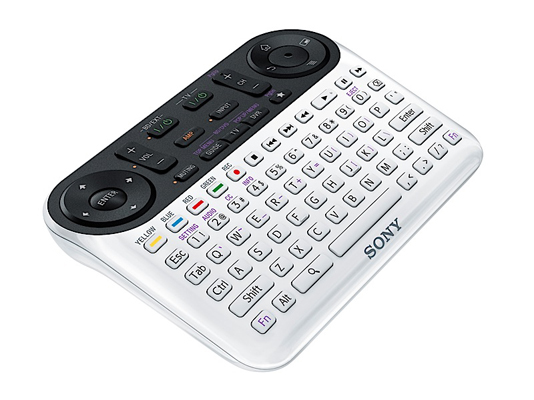
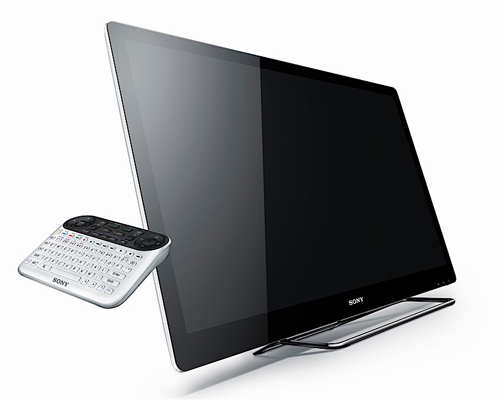
The Sony Internet TV lineup includes 4 HDTVs: the 24-inch NSX-24GT1 ($599.99), the 32-inch NSX-32GT1 ($799.99), the 40-inch NSX-40GT1 ($999.99), and the 46-inch NSX-46GT1 ($1,399.99).  They all feature a full HD 1080p display with edge LED backlighting except for the 24-incher; that one’s fitted with CCFL backlighting.  They all include built-in WiFi and around back there’s 4 HDMI ports, an Ethernet port, 2 USB ports, component and composite video inputs, optical audio output, 2 IR blasters, a headphone output, and power of course.  Every TV will come bundled with an bizarre-looking QWERTY keypad remote.  Though it appears large in pictures, the remote is about the size of the small Logitech Mini Controller and it takes design cues from the PS3 DualShock controller (it’s got left and right triggers).  In addition to the QWERTY buttons, the remote also has a D-pad and an optical mouse built-in.  The whole contraption does not look entirely intuitive; there’s definitely going to be a learning curve with it.

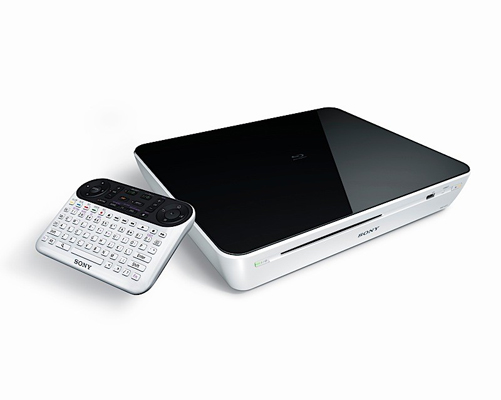
Already have a perfectly fine HDTV in the living room?  Skip the TV and go for the new Internet TV Blu-ray Disc Player.  At $399.99, the BD player sounds like a pretty good deal when it compare it to the Logitech Revue.  For an extra $100 you’re getting Blu-ray disc support; something to think about.  The player includes built-in WiFi, 1 HDMI input, 1 HDMI output, and 4 USB inputs.

I said I wouldn’t talk about software, but there’s one Sony addition on this front.  In addition to the Google TV apps, all Sony Internet TV products will come preinstalled with Qriocity, a Sony video on-demand app.  Sony also reminds you that more apps are on the way when the Android Market hits Google TV in early 2011.

The Sony Internet TV and Sony Internet TV Blu-ray Disc Player are currently on pre-sale at SonyStyle and Best Buy.  They will be available to purchase this weekend starting October 16 at Sony Style stores, and they’ll make their way to Best Buy outlets on October 24.

Google TV has arrived.  Will it be the Logitech Revue or Sony Internet TV?  The choice is yours.

[Via Sony; Engadget]

Windows Phone 7: 10 devices, 4 launch hardware partners, 60 mobile carriers in over 30 countries worldwide; coming 10/21 in Europe & Asia, early November in U.S.

Today Microsoft CEO Steve Ballmer took the stage in New York City to reveal the final details surrounding the launch of Windows Phone 7.  Microsoft first unveiled their new cell phone operating system in February at Mobile World Congress; next they spotlighted developer support at MIX’10; and most recently they detailed Xbox Live integration.  All there was left to do is reveal launch harware and mobile operator partners and device release dates and pricing.  And that’s exactly what went down today in NYC.

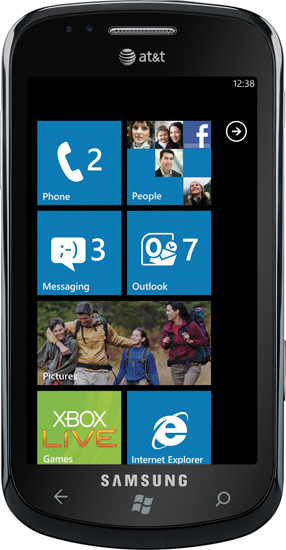
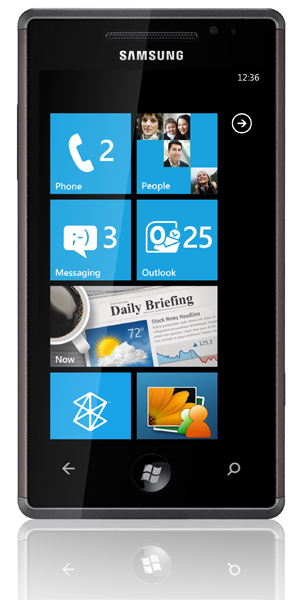
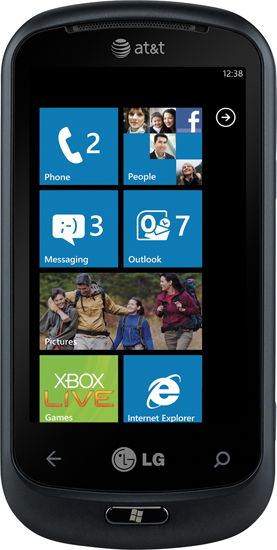
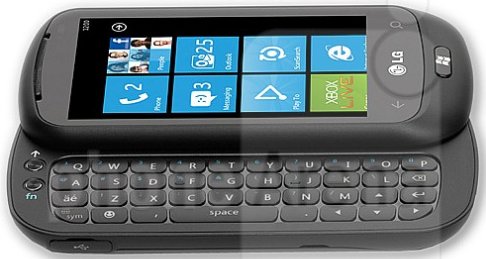
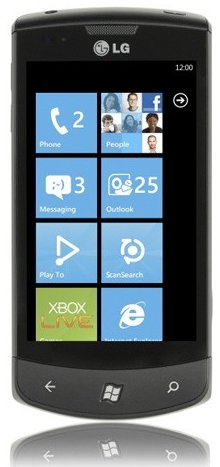
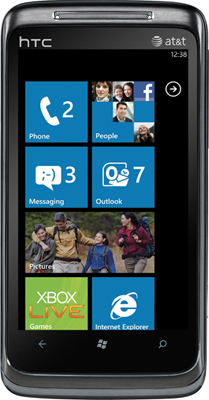
Let’s start with the Windows Phone 7 launch hardware partners and the actual devices you might potentially pick up come this holiday season.  Samsung, LG, HTC, and Dell are collectively bringing ten new devices that will run WP7.  The Samsung Focus (codenamed Cetus) features a 4-inch (480×800) Super AMOLED display, 1GHz processor, 5 megapixel camera with LED flash, and 8GB of onboard storage with microSD expansion up to 32GB.  It’s the thinnest WP7 launch device measuring at 9.9mm (or .3 inches) thin.  It will launch exclusively with AT&T in the U.S.  The Samsung Omnia 7 features the same 4-inch (480×800) Super AMOLED display, 1GHz Snapdragon processor, 5 megapixel camera with LED flash, and 8GB of onboard storage.  It will launch with Orange (France and UK), SFR (France), Movistar (Spain), and Deutsch Telekom on November 8.  The LG Quantum (or Optimus 7Q outside the U.S.) features a 3.5 inch (480×800) display, 1GHz Snapdragon processor, 5 megapixel camera with LED flash, 8GB of onboard storage, a slideout QWERTY keyboard, and it comes preloaded with PlayTo, an app that allows users to wirelessly stream content to DLNA-enabled devices.  It will launch exclusively with AT&T in the U.S. and with Telstra in Australia.  The LG Optimus 7 features a 3.8 inch (480×800) LCD display, 1GHz processor, 5 megapixel camera with LED flash, and 16GB of onboard storage.  It will launch with Telus (Canada), América Móvil (Mexico), Movistar (Spain), Vodafone (Germany, Italy, Spain and UK), and SingTel (Singapore).

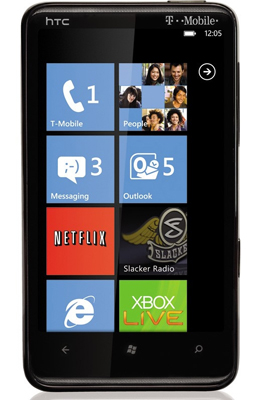
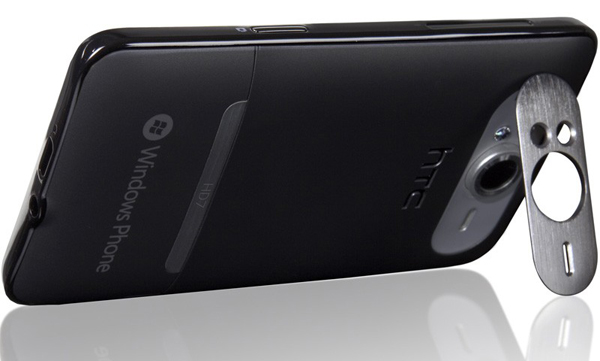
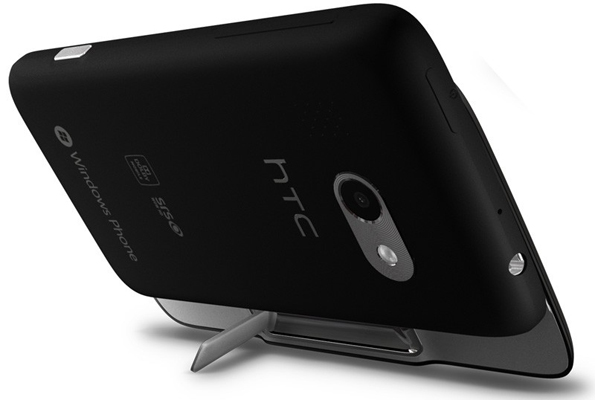
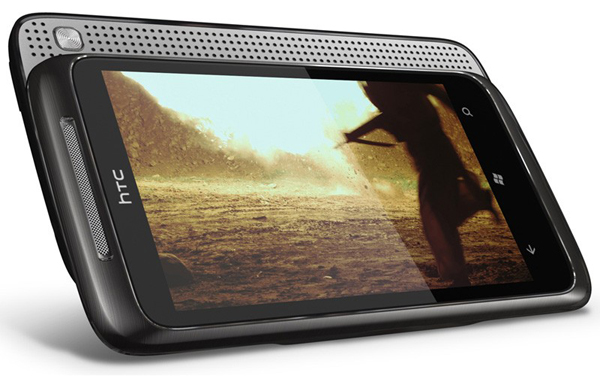
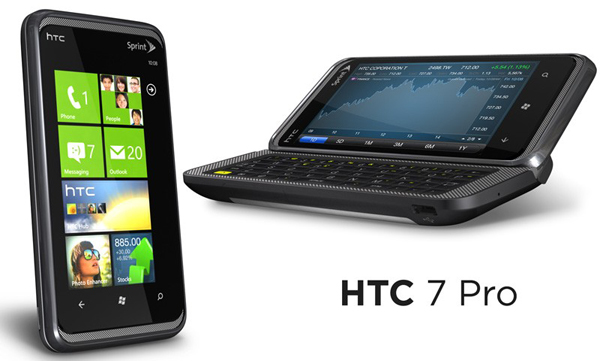
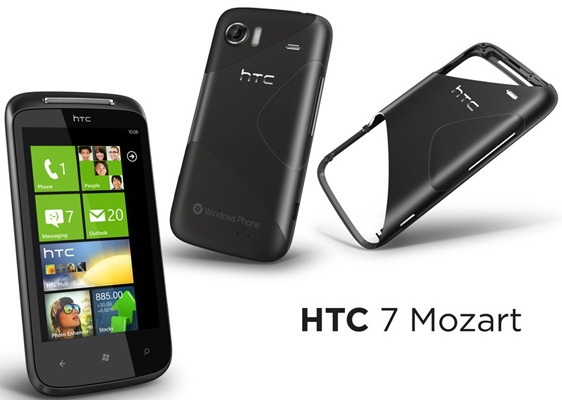
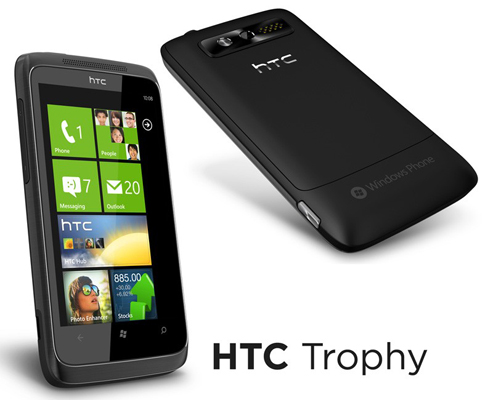
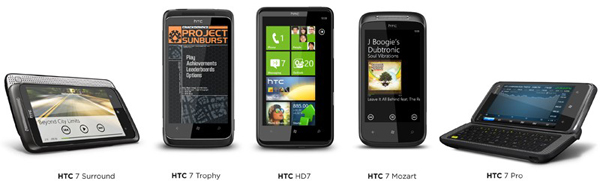
HTC is launching five WP7-powered devices.  The HTC HD7 features a 4.3 inch (480×800) display (it’s the WP7 launch device with the largest display), 1GHz Snapdragon processor, 576MB of RAM, 5 megapixel autofocus camera with dual LED flash (supports HD 720p video recording), 16GB of onboard memory, built-in kickstand, and it comes preloaded with Netflix, Slacker,  T-Mobile Family Room (a note-taking sharing app), and a T-Mobile TV entertainment app.  It will launch exclusively with T-Mobile in the U.S. in mid-November and with O2 (UK, Germany, Ireland), Movistar (Spain), SingTel (Singapore), Telstra (Australia), and Bouygues Telecom (France) on October 21.  The HTC 7 Surround features a 3.8 inch (480×800) display, 1GHz Snapdragon processor, 576MB of RAM, 5 megapixel autofocus camera with LED flash (supports HD 720p video recording), built-in kickstand, and 8GB of onboard storage.  What makes this device standout from all the others is the slideout speaker that features Dolby Mobile and SRS Surround Sound technologies.  It will launch exclusively with AT&T in the U.S. and with Telus in Canada.  The HTC 7 Pro will be the first WP7 CDMA device and will launch exclusively with Sprint in the first half of 2011.  It features a 3.6 inch (400×800) display, 1GHz Snapdragon processor, 576MB of RAM, 5 megapixel autofocus camera with LED flash (supports HD 720p video recording), 16GB of onboard storage, and a slideout QWERTY keyboard.  Update: The 7 Pro will arrive in Europe “early next year.”  The HTC 7 Mozart and HTC 7 Trophy are two WP7 handsets that will not (initially, at least) not make it to the U.S. market.  They both feature a 1GHz Snapdragon processor, 576MB of RAM, 8GB of built-in storage, and HD 720p video recording.  Here’s where they differ.  The Mozart features a sleek aluminum unibody construction with a  3.7-inch (480×800) display and 8 megapixel camera with a Xenon flash.  The Trophy, on the other hand, features a slightly larger 3.8 inch (480×800) display and a slightly lesser 5 megapixel camera with LED flash.  The Mozart with launch with Orange (France and UK), Deutsche Telekom (Germany), Telstra (Australia) and the Trophy will launch with Vodafone (Australia, Germany, Spain and UK) and SFR (France).

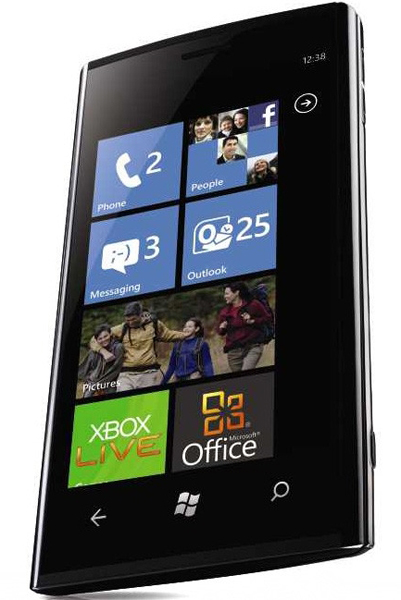
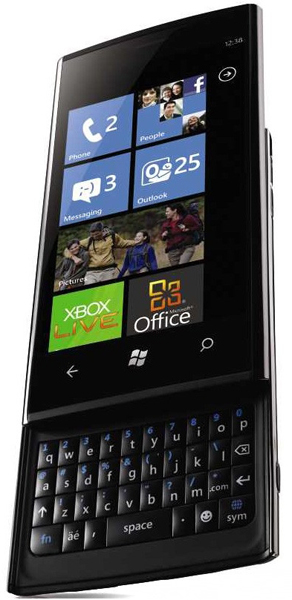
And finally there’s the Dell Venue Pro.  It features a 4.1-inch (480×800) AMOLED display, 1GHz Snapdragon processor,  5 megapixel camera with flash, and a portrait-designed QWERTY keyboard.  It will launch exclusively with T-Mobile in the U.S.

And that’s a wrap on the hardware discussion.  As you can see, all ten WP7 devices are very similar in terms of internals: the 1GHz processor, the 5 megapixel camera, the 8GB-16GB internal storage, 3.5 inch to 4.3 displays, and the handful of slideout QWERTY keyboard-equipped models.  Through the end of the year, WP7 devices will be exclusive to AT&T and T-Mobile; this leaves a wide gap in the CDMA (Verizon/Sprint) playing field.  By the time Q1 of 2011 rolls around, Microsoft better have deals finalized with the other mobile carriers if they truly want to compete in the competitive smartphone market.  Also, hardware partners will eventually have to up their game with better and differentiating specifications and designs if they want to stay relevant.  HTC is doing a fine job so far with the 7 Surround speaker design the HD7’s large 4.3 inch display.  But for now, the WP7 starting lineup is quite impressive.  The stars are certainly aligning for a successful launch.

In addition to revealing hardware and mobile carrier partners, Microsoft also shared some information regarding software developments.  Though they weren’t specific about the exact number of launch apps for Windows Marketplace, they did show off bunch of promising apps.  They include Twitter, eBay, Fandango, Netflix, Slacker, IMDb, and games such as Tetris, The Sims 3, Monopoly, Need for Speed: Undercover, and The Harvest.  AT&T CEO Ralph de la Vega was on hand to show off the AT&T U-verse app.  The app will be preloaded on all AT&T WP7 devices and will allow users to download and watch TV shows on the go.  If you are already a U-verse subscriber at home, accessing and downloading content off the app is free.  You will have the ability to manage your DVR recordings, access TV guide listings and an On Demand library.  If you are not a subscriber, AT&T will offer a $9.99/month plan to watch TV on the go when WP7 launches wide in November.  (Keep in mind, “live” TV is not available; you are simply downloading content to watch now or later.)  In related news, AT&T has confirmed that Xbox 360 owners will have the ability to use their console as a U-verse receiver starting October 15.  New subscribers can order a $99 Xbox installation kit and a technician will load the software onto the console for you; current subscribers will be forced to pay an extra $55 on top of the $99 installation kit to make the switch from set-top box to Xbox.  And here’s one last software tidbit: Microsoft promises a free software update bringing copy-and-paste functionality to all WP7 devices will be pushed out in “early 2011.”  Update: In a statement Microsoft confirms that public beta software will be available for Mac users to sync “select content” with their WP7 device later this year.  Look after the break for the first two WP7 commercials!

Apple, Google, RIM…it’s on.

[Via Engadget, here, here & here; Quantum image via PhoneArena] Continue reading Windows Phone 7: 10 devices, 4 launch hardware partners, 60 mobile carriers in over 30 countries worldwide; coming 10/21 in Europe & Asia, early November in U.S.

Sound sculptures are color droplets brought to life

Dentsu London, the design studio that brought us iPad light painting, teamed up with photographer Linden Gledhill to produce an amazing array of “sound sculptures” to promote Canon’s line of PIXMA color printers.  Gledhill used a Canon 5D Mark II to capture these “dancing droplets of paint in extreme detail as they react to sound waves.”  How’d they do it?

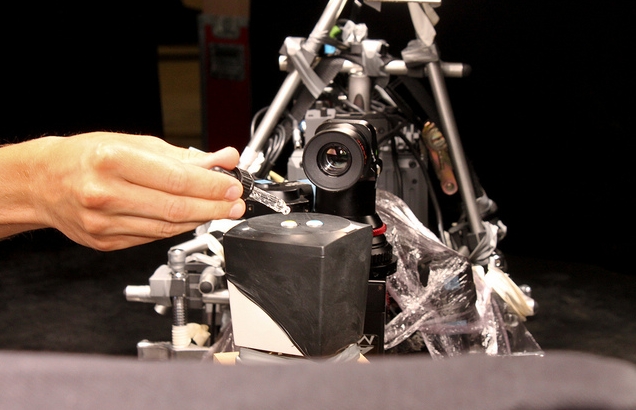
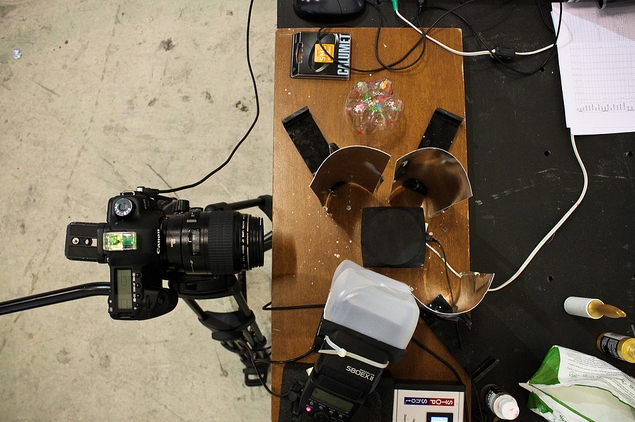
The ‘colour sculptures’ were created by stretching a balloon over a speaker to form a membrane.  A few drops of paint were then placed in the centre of the balloon and a single sharp note was played through the speaker, causing the paint to erupt for just a fraction of a second.  We experimented with different instruments, frequencies and volumes, which each had an effect on the formations.

The color droplet experimentation resulted in beautiful imagery and video.  Look in the gallery below to see the makeshift rig and a handful of pictures; after the break you’ll find video of the droplets in super slo-mo action (5,000 frames-per-second slow) and a behind-the-scenes peek into how it was executed.  Head over to Dentsu London’s Flickr and YouTube pages for more content.

[Via Gizmodo; Dentsu London; DLFlickr]

Continue reading Sound sculptures are color droplets brought to life

Google is testing self-automated cars on streets and highways

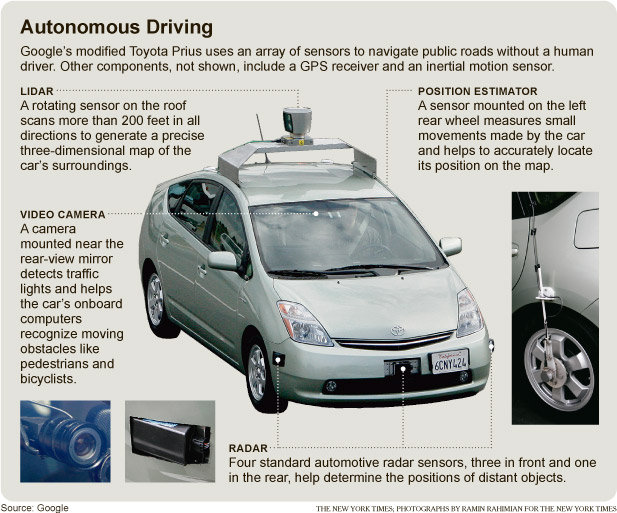
Google has totally submerged themselves in the transportation industry now.  After investing over $1 million in the human-powered monorail racetrack called Shweeb, Google spilled the details concerning its latest initiative to create entirely self-automated vehicles.  Straight from Google’s mouth (erm, blog) is their philosophy on the project: Our goal is to help prevent traffic accidents, free up people’s time and reduce carbon emissions by fundamentally changing car use. .. We’ve always been optimistic about technology’s ability to advance society, which is why we have pushed so hard to improve the capabilities of self-driving cars beyond where they are today.

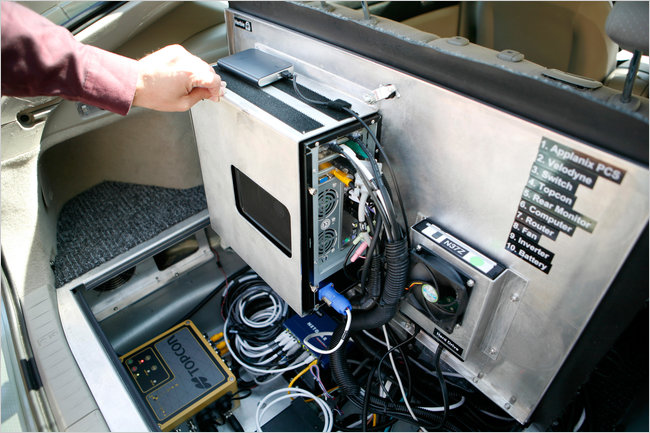
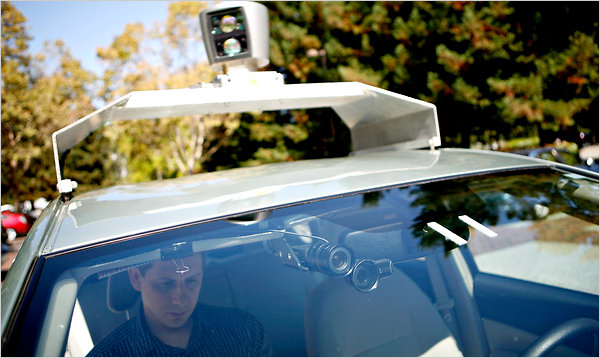
When Google says these cars are self-automated, they mean it in the most literal sense of the term.  You see that odd-looking Toyota Prius in the image above?  That car is driving itself on Highway 101 in Mountain View, California.  Google’s seven test cars have racked up 1,000 miles without human intervention.  (Keep in mind, though, that trained operators remain at the wheel in case of malfunction.)  They use video cameras, radar sensors, and a laser range finder to navigate themselves on the road.  The tech talks to Google’s data centers to obtain important transportation information such as detailed maps and terrain mapping.  A NYT editor was lucky enough to take a ride inside that Prius earlier this week, and here’s an excerpt from his experience:

“It drove at the speed limit, which it knew because the limit for every road is included in its database, and left the freeway several exits later. The device atop the car produced a detailed map of the environment.  The car then drove in city traffic through Mountain View, stopping for lights and stop signs, as well as making announcements like “approaching a crosswalk” (to warn the human at the wheel) or “turn ahead” in a pleasant female voice. This same pleasant voice would, engineers said, alert the driver if a master control system detected anything amiss with the various sensors.”

The search giant is collaborating with brilliant minds hailing from the DARPA Challenges, a series of autonomous vehicle races organized by the government.  You’re going to want to look after the break to watch a fascinating video starring a self-automated Volkswagen created by Germany’s TU Braunschweig, a team of researchers and engineers known for the work in the Challenges.

Now don’t expect to purchase a self-automated car anytime soon.  These things won’t be mass produced for many, many year; in fact, Google predicts the advanced vehicle technology won’t be ready to showcase its mystical powers for consumers until 2018 at the earliest.  But hey–at least this dream of a safer, more efficient means of transportation is being implemented today.  If Google puts the same amount of effort into this project as they do with search, we should be manning driver-less cars in no time.

Update: A Good Morning America correspondent took a ride in one of the Google self-automated cars.  She even stepped in front of it when it was driving full speed to see its reaction time.  Look after the break for the heart-stopping video report.

[Via GoogleBlog; Engadget; NYT]

Continue reading Google is testing self-automated cars on streets and highways

Google TV ready for primetime (part 1): Logitech Revue

Today Logitech held a press event to unveil the Logitech Revue with Google TV companion box.  But before I go into the specifics of the box, allow me to refresh your memory concerning what Google TV is exactly.  Back in May Google held its annual Google I/O developer conference; it was here where they detailed Google TV.  In essence, Google TV is software that integrates TV and the web on one screen.  GTV’s most prominent feature is search.  Typical situation: You’re hanging in the living room and want to watch an episode of Top Gear but you have no idea when and where it airs.  Simply tap the search button on a compatable keyboard (more on the hardware later) and type “Top Gear” into the search bar.  Within seconds GTV will provide you with all kinds of relevant information about the show.  In addition to letting you know at what time and what channel it airs on, you will be provided with the show’s web page and YouTube videos.  That’s right–GTV searches live television, your service provider’s guide listing, and the world wide web.  But it does more than this.  GTV comes installed with the Chrome web browser giving you access to virtually every website on your HDTV.  And yes, the browser supports Adobe Flash Player 10.1.  With the DualView function, you can enable picture-in-picture only this time that means you can browse the web and watch TV simultaneously.  Typical situation: You’re watching a baseball game and want to check on your fantasty team and player stats.  DualView is your friend here.

Watching TV and searching the web for TV-related content (or just for fun) is only the beginning.  GTV also supports apps.  Though the Android Marketplace won’t be ready for the service until 2011, GTV will come preloaded with a bunch of useful apps.  Twitter, Pandora, Napster, VEVO, blip.tv, The New York Times, USA Today, CNBC, NBA GameTime, Netflix, Amazon Video On Demand, HBO GO.  Google is reportedly in talks to bring Hulu Plus to the service as well.  Google provides YouTube and a media gallery to browse your photos and video.  In addition to app and developer support, TV networks have agreed to optimize their web portals for viewing on GTV.  For example, Turner Broadcasting has been hard at work tweaking GTV optimized sites for TBS, TNT, CNN, Cartoon Network, and Adult Swim.  No doubt more networks will follow suit.

So I think you get it by now.  Google TV brings TV and the web together in one space–your HDTV.  Cross-platform search, web browsing, and apps.  Now you must be thinking how can I get Google TV on my television?  Here’s where today’s news enters the picture.

Logitech Revue is a companion box that hooks up to your HDTV, cable/satellite box, and the Internet to bring the Google TV experience to you.  Want hardware specs?  You got it.  HDMI In, HDMI out, audio optical output (S/PDIF), Ethernet port,  802.11a/b/g/n WiFi, 2 USB 2.0 ports, integrated Logitech Harmony Link IR blaster, and Logitech Unifying wireless technology.  Setup is simple really.  Connect the bundled HDMI cable to the Revue box and your HDTV, bridge together the Revue box with your cable/satellite box with another HDMI cable, and hook up the Revue box to the Internet (either direct to Ethernet or to your wireless home network).  That’s it.  And how do you interact with the GTV interface?  With the included Logitech Keyboard Controller of course!  The full QWERTY keyboard resembles a standard PC keyboard but also comes equipped with a touchpad, D-pad, dedicated search and DualView buttons, and remote control buttons.  It speaks to the Revue box (which in turn talks to the rest of your TV setup) using Logitech’s proprietary wireless technology.  Logitech Revue with the Keyboard Controller will sell for $299.99 when it releases at the end of the month. Continue reading Google TV ready for primetime (part 1): Logitech Revue

Motorola Droid Pro is a droid for the suits

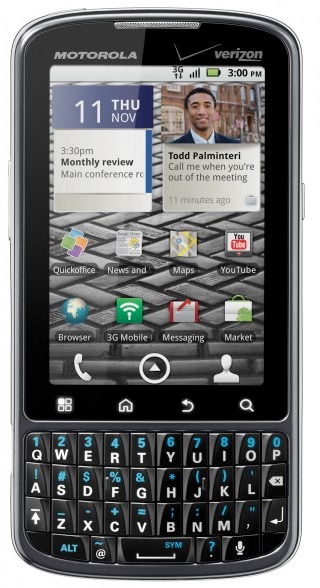
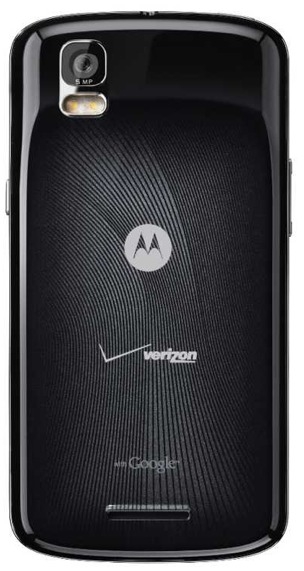
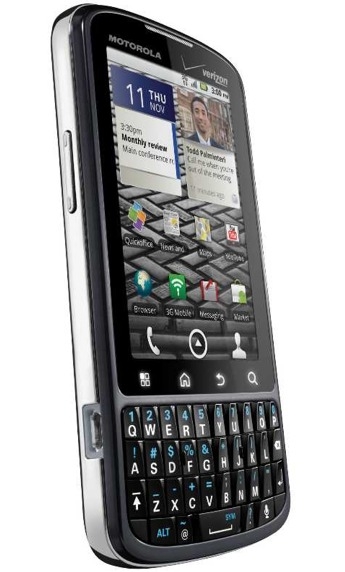
It’s time to welcome yet another member into the Droid family.  This droid does business.  Droid Pro by Motorola packs the usual goodies: 1GHz processor, 5 megapixel camera with auto-focus and dual LED flash, 512MB of memory, 2GB of onboard storage, WiFi, Bluetooth, and it runs Android 2.2.  What makes the Pro stand out from the herd is its distinct look and business-oriented feature set.  Below the 3.1 inch display sits a BlackBerry-esque QWERTY keyboard that’s “designed for speed and convenience.”  The Pro is a “global ready” smartphone, packing a dual-mode CDMA/GSM chip for worldwide roaming that allows customers to enjoy wireless voice service in more than 220 countries and data coverage in more than 200 countries.  Features for the suits include: support for both Exchange e-mail and Gmail for business; corporate directory look-up and unified calendar for Enterprise and sync with Google Calendar; view, edit, and share Microsoft Word, PowerPoint, and Excel documents; and built-in security features, including AuthenTec IPSec multi-headed VPN integration, remote wipe of device and SD card, and complex password support.  Essentially this is a Droid built for the business men and women who have been fighting the urge to dump their BlackBerrys for an Android-based device.  Tempting, isn’t it?  Droid Pro releases this November on Verizon Wireless.  Pricing has yet to be disclosed, but $199 with a 2-year agreement will likely be it.  Full PR after the break.

[Via Engadget]

Continue reading Motorola Droid Pro is a droid for the suits

OnLive monthly fees go bye-bye

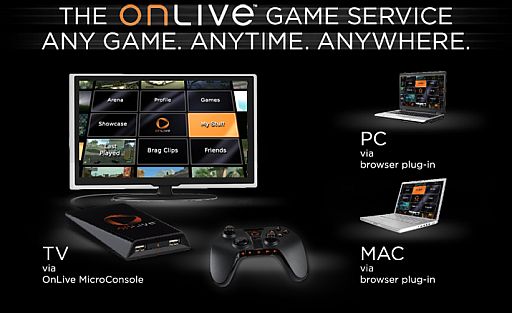
OnLive, the gaming on-demand cloud-based service, is no longer requiring a monthy fee to access its features.  This is really great news, so great in fact I’ll allow Founder & CEO Steve Perlman to explain the sudden change in philosophy.

Of course, we’ve had a promotion waiving the monthly fee for the first year, so this announcement is confirming what we had hoped—that we can continue without a monthly fee beyond the first year. Although we wish we could have confirmed no monthly fee from the get-go, pioneering a major new video game paradigm is hard: we had to first grow to a large base of regular users before we could understand usage patterns and operating costs. Now that we’ve reached that stage, we can confidently say a monthly fee is not needed, which deserves a double WOOT! WOOT!

Woot woot, indeed.  The original plan was to waive the monthy fee for the first year, as Perlman explained, and then charge $4.95/month for the second year.  All that’s been scrapped.  Instant-play demos, massive spectating, brag clip videos, messaging, and friending are all absolutely free to access now.  The only time you’ll need to whip out a credit card is if you decide to buy a 3-day or 5-day PlayPass to stream a full game.  You may also decide to purchase a game for keeps.  All in all this is an exciting move forward for OnLive.  And coming this holiday season are the MicroConsole TV Adapters and OnLive Game Pad Controllers that promise to bring the games from the PC to the TV hassle-free.  So watcha waiting for?  Get your streamin’ on.

[Via Engadget; OnLive]

Goodbye Microsoft Surface, hello LightSpace

Microsoft Research is back, and this time they are bringing a new technology to the table (hehe) that’s going to eliminate any desire you might have had to purchase an exuberantly priced Microsoft Surface.

LightSpace combines elements of surface computing and augmented reality research to create a highly interactive space where any surface, and even the space between surfaces, is fully interactive. Our concept transforms the ideas of surface computing into the new realm of spatial computing.

In essense LightSpace rips out the multiple depth 3D cameras and projectors from their secret cove beneath a table and places them up in the ceiling.  In effect, this means that all Surface user interfaces and features can be displayed on virtually any flat surface; the actual Surface table is no longer required.  You’re going to want to watch the video demonstration above; some of the LightSpace applications are quite extraordinary.  In one example the Microsoft researcher “picks up” an object located on a table projection and transfers it in his hand to a second wall display.  It’s drag-and-drop IRL.  Now remember, this is a Microsoft Research project so there’s no telling how long it’s going to cook in the labs before it makes its away to the general public (if ever).

[Via Engadget; MicrosoftResearch]

Google invests $1.05 million in Shweeb, the pedal-powered monorail

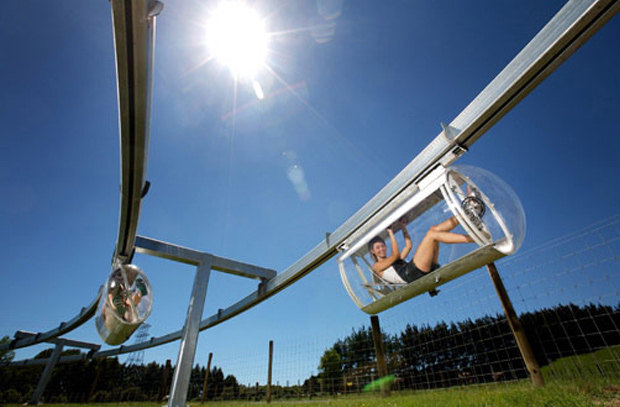
Remember the Shweeb?  I’ll refresh your memory, then.  Shweeb is an alternative form of transportation, one that is controlled by you and your legs and feet.  It’s the world’s first human-powered monorail racetrack.  Users are secured inside transparent pods and can travel at speeds of up to 45km/hr.  As crazy as it looks and sounds, Google clearly imagines a future with Shweeb in it.  This week the search engine (among many other things) invested $1.05 million into the “adrenalin-fueled” adventure.  The only Shweeb transportation in existance resides in at an amusement park in New Zealand and it’s been a hit with tourists since its launch in 2007.  Google managed to stumble upon the Shweeb thanks to the big G’s Project 10 to the 100, an initiative “to change the world, in the hope of helping as many people as possible.”  The initiative received over over 150,000 applicants from 170 countries, and Shweeb landed in the top five after a public voting of the most promising ideas for the future.  It was named the #1 in the Drive innovation in public transport category.  So what does Shweeb plan on doing with the money?  “The northern hemisphere became the natural choicefor us due to the sheer number of people that require transport and also the opportunity to achieve a higher global profile for the future growth of the company,” says managing director Peter Cossey.  I just think Google wants a new attraction at their unconventional Googleplex HQ.

[Via Inhabitat]

Nostalgia alert: iPod nano gets crammed into a Dreamcast VMU

Remember the old Visual Memory Unit, the Sega Dreamcast accessory that doubled as a memory card to save games and an auxiliary display during gameplay?  Well here it is with an new iPod nano stuffed inside.  Though it certainly took some effort power to properly align the 1.5 inch nano display and headphone port, doesn’t it look like the VMU was always destined to house an iPod?

[Via Engadget]

Google URL shortener is your friend

Bookmark http://goo.gl/. It’s going to come in handy, trust me.

I’m sure you’ve heard of TinyURL and Bit.ly–these are popular URL shortener websites.  You can copy and paste a long URL into them and they spit out a shorter URL for you to use.  They are especially helpful if you’re an avid user of Twitter, a social platform that restricts you to 140 characters per tweet.  Though it’s been available since last December living in the Google Toolbar, Google’s URL shortener is now available for the general public through its very own website appropriately named goo.gl.  “We don’t intend to overload goo.gl with features, but we do want it to be the stablest, most secure, and fastest URL shortener on the web,” says Google.  “With goo.gl, every time you shorten a URL, you know it will work, it will work fast, and it will keep working. You also know that when you click a goo.gl shortened URL, you’re protected against malware, phishing and spam using the same industry-leading technology we use in search and other products.”  And here’s the best part.  If you sign in with your Google Account, you can keep track of all the URLs you shorten; “public, real-time analytics data, complete with traffic over time, top referrers, and visitor profiles” are at your disposal to view.  Oh, and one more thing.. You can add .qr to the end of any shortened URL to transform the link into a QR code (which can be read by many smartphones and other devices).  How neat is that?

[Via GoogleSocialWebBlog; TechCrunch]

Dr. Dre & Monster collab to push out new lineup of Beats headphones

The Beats by Dr. Dre product line was co-founded by rapper/produced Dr. Dre and Interscope Geffen A&M Chairman Jimmy Iovin back in 2008 to “reproduce the full spectrum of sound that musical artists and producers hear in professional recording studios.”  The brand has branched in two directions: headphones and HP laptops (Envy models).  The original crop of headphones included the over-the-ear Studio Beats ($349) and Solo Beats ($199) and the in-ear Tour Beats ($189).  In time two new versions of the Solo Beats hit the market–Solo HD ($229) and Solo HD Product RED special edition ($229).  Also, a new category called Artist Series Headphones introduced two new in-ear ‘phones–Heartbeats (Lady Gaga, $149) and Diddy Beats (Diddy, $179).

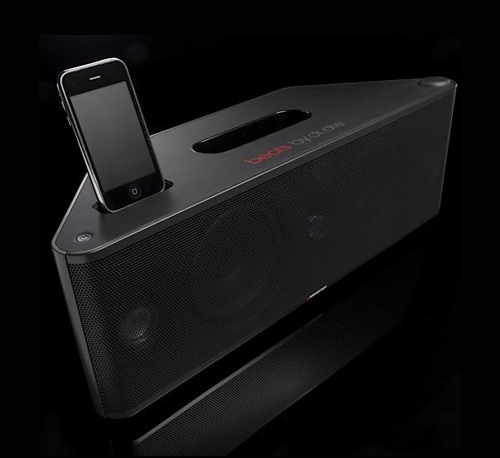
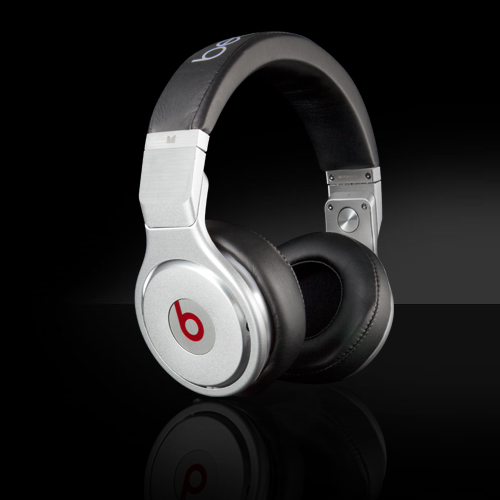
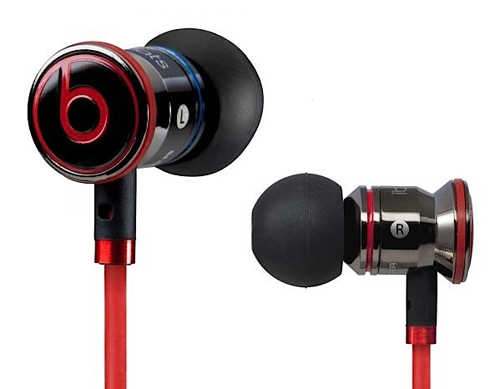
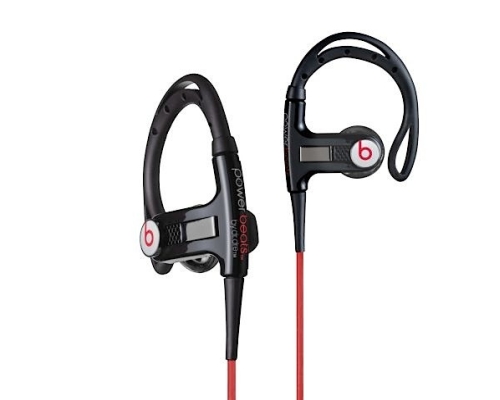
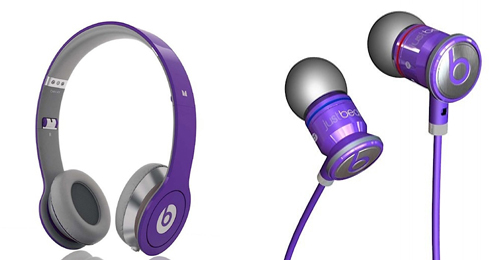
On Friday Dr. Dre & Monster unveiled five new Beats branded products, four headphones and a portable iPod dock.  The Beatbox ($399) is a digital sound system built to dock iPods and iPhones and features “proprietary dual 5.25-inch long throw bass drivers for superior bass reproduction and two optimized 2-inch concave high frequency drivers for precise soundstaging.”  Beats Pro ($449) relinquishes the Studio Beats as the top-of-the-line Beats headphones.  These over-the-ear cans feature an all-metal body construction and are “ideal for in-studio production and ultimate quality music listening.”  iBeats ($119) “feature a new sealed in-ear design that literally reduces external noise for a better music experience” and three custom-fit eartip sizes.  They are “ideal for exercising and active lifestyles.”  The latest edition to the Artist Series Headphones collection is the Power Beats (LeBron James, $179).  The new in-ear “performance sports headphone” features a new dual driver design with a built-in subwoofer and midrange tweeter, an adjustable/bendable ear hook with a flexible arm, and a non-noise occluding headphone eartip which allows external noise to be audible during music playback.  There are black, red, and white color options for these.  And finally there’s the JustBeats, Justin Bieber branded headphones.  They will come in two varients, over-the-ear ($199) and in-ear ($119).  They are “specifically aimed at “opening the ears” of young music listeners.”  The “eye-catching matte purple finish” happens to be Bieber’s favorite color, as you all should well know.

According to the press release, all the new Beats by Dre products (excluding the JustBeats) will be made available in the US, UK, France and Germany in the “coming weeks.”  The purple Bieber cans will sell exclusively at Best Buy this holiday season.  Look in the gallery below to see what they all look like.  Dre says, “What you’re seeing today is what me and Jimmy set out to do with Beats. It’s not just about headphones it’s about changing the whole game in terms of the listening experience. And it’s still just the beginning…”  The new ‘phones are simplistically elegant and I’m sure they produce sound nothing short of crystal-clear magnificence.  Here’s what I’m worried about, though.  Dre, you brand the Beats product line with the tag “people aren’t hearing all the music.”  You’re going to have a hard time selling your passion for pristine sound reproduction to all the people at these exuberant price points.

[Via Engadget; BeatsbyDre]

Continue reading Dr. Dre & Monster collab to push out new lineup of Beats headphones