Category Archives: Technology

Cell phone makers respond to Jobs’ claims surrounding Antennagate [Update: Apple throws Moto’s Droid X into the mix]
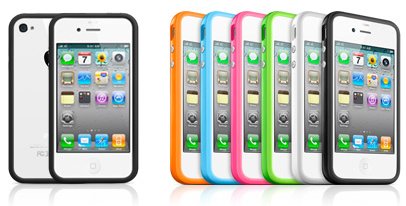
Last week Apple CEO Steve Jobs held a press conference to address the iPhone 4 deathgrip situation.  During the presentation he spit out phrases like “phones aren’t perfect” and claimed that the antenna problem is “a challenge for the entire industry.”  To provide factual evidence to back these statements, Jobs showcased videos of the iPhone 3GS, BlackBerry Bold 9700, HTC Droid Eris, and Samsung Omnia II all dropping their signal strength when gripped in a certain way.  (Apple uploaded these videos to their YouTube page.)  Over the course of the next few days following the press conference, RIM, HTC, Samsung, and Nokia shared their thoughts on the matter.  You can be sure they did not take Apple’s “all smartphones have weak spots” accusation lightly.

The first cell phone manufacturer to counter-attack Apple’s claims was Nokia, a company Apple interestingly did not make an example of at the press conference.  Though they agree with the fact that “antenna performance of a mobile device/phone may be affected with a tight grip, depending on how the device is held”, a non-direct jab at Apple comes later in the statement:  “… we prioritize antenna performance over physical design if they are ever in conflict.”  Since Apple did not mention Nokia during the presentation, Nokia kindly left Apple out of their brief statement.  Little did they know that Apple would post a video of the Nokia N97 Mini getting deathgripped on their YouTube site just four days later.

Now let’s hear what the other cell phone makers had to say about their honorary mention.  RIM co-CEOs Mike Lazaridis and Jim Balsillie start the statement off like this: “Apple’s attempt to draw RIM into Apple’s self-made debacle is unacceptable.”  Other choice quotes:  “Apple’s claims about RIM products appear to be deliberate attempts to distort the public’s understanding of an antenna design issue and to deflect attention from Apple’s difficult situation.”  ..  “One thing is for certain, RIM’s customers don’t need to use a case for their BlackBerry smartphone to maintain proper connectivity.”  Yeah, they just said that.

Things cool down a bit with the reactions from HTC and Samsung.  In an exclusive statement to Pocket-lint, HTC’s Eric Lin compared the Droid Eris’ complaint rate to iPhone 4’s.  At the conference, Jobs said that over 0.55 percent of iPhone 4 customers called AppleCare to complain about the antenna problem to date.  Lin shared that “approximately .016% of customers” feel the need to call in about Droid Eris antenna-related issues.  That’s around 34x lower then Apple’s rate.  Although HTC has yet to push out more formal response to the debacle, I’d say they win the point on this one.  Samsung rounds things out with a terse reply saying that the Omnia II’s antenna is located at the bottom of the device, a logical “design [that] keeps the distance between a hand and an antenna.”  Look after the break for the full statements from Nokia, RIM, and Samsung.

All in all I believe that these cell phone makers are justified in responding to Apple’s “Antennagate” mess.  It may be true that most smartphones have weak spots, but it was an obvious design flaw on Apple’s part to both place that spot where a hand is apt to grip the device and point out its exact position with a black strip.  And to reiterate RIM’s closing words, all of these other smartphones do not require a case to function properly.  Handing out free cases is a temporary fix.  To remedy a hardware problem a new, better design must be conjured up.  When it comes time for Apple to reevaluate the situation in September, I hope they have a more permanent fix in the works.

Update: Today (7/26) Apple posted yet another video in attempt to prove that the antenna problem affects most smartphones.  This time around it’s Motorola’s Droid X, one of Verizon’s current flagship phones.  Watch the bars drop from 3 to 0 after the break.

[Via Engadget, here, here, here, here & here] Continue reading Cell phone makers respond to Jobs’ claims surrounding Antennagate [Update: Apple throws Moto’s Droid X into the mix]

Apple’s answer to iPhone 4 deathgrippers: free cases

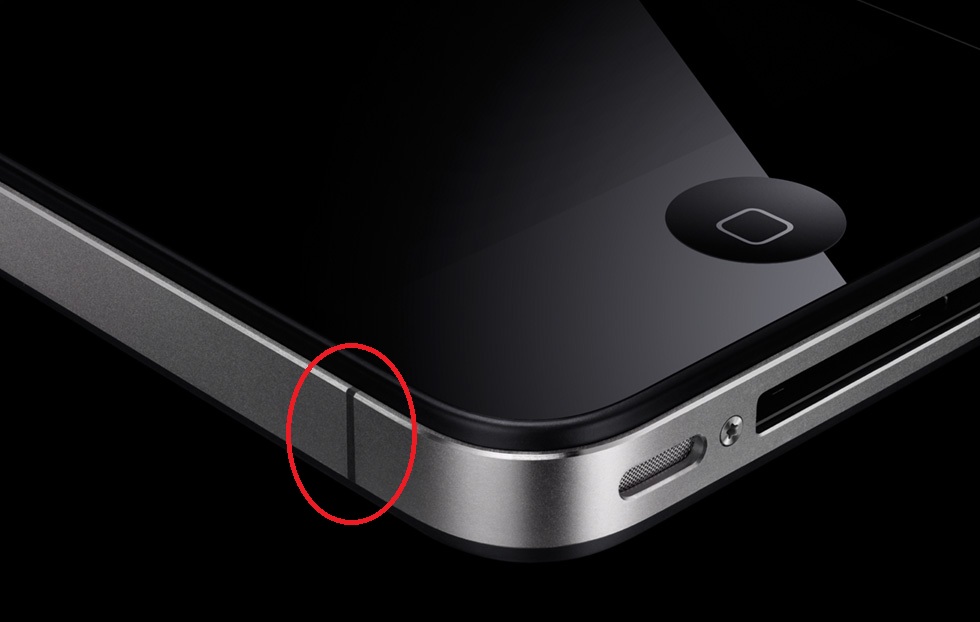
Today Apple held a press conference to address the iPhone 4 antenna problem that’s been making waves in the news recently.  Just to recap, the antenna problem occurs when an iPhone 4 user grips the lower left side of the phone.  AT&T signal strengh drops from five bars to none at a rapid rate when the user touches and/or grips that specific part of the phone.  An official statement from Apple advised users to hold their phones differently or slap on a case.  A case would cover the vulnerable lower left side and result in better signal strength during day-to-day use.  Today Jobs announced that Apple will begin offering their Bumper case for free for all iPhone 4 owners who purchase their device before September 30.  In regards to extending the free case offer Apple says they will evaluate the situation again in late September.  If you’ve already purchased a Bumper case, you can receive a full refund on it.  Since Apple cannot manufacture enough Bumpers fast enough, they will offer a choice of free cases to choose from (these have not been specified yet).  Starting late next week you can apply for a free case at Apple’s online store.  And if you’re totally unsatisfied with your purchase you can get a full refund on the phone; Apple’s got a 30 day return policy and a restocking fee will not be applied.

What led Apple to making this decision to offer free cases?  Read on to find out. Continue reading Apple’s answer to iPhone 4 deathgrippers: free cases

iPhone 4 sales, international ship date, proximity sensor update & white model get discussed [Update: White iPhone delayed until end of year]

At the press conference that formally addressed the iPhone 4 antenna problem Apple alloted some time to discuss other news surrounding the magical (if it’s in a case) phone.  Apple has sold over three million iPhone 4s since it launched three weeks ago.  He also says the 4 has received “the highest customer satisfaction of any iPhone or smartphone.”  Next up, the iPhone 4 will ship in 17 more countries on July 30, including a bunch of European countries, Canada, New Zealand, Australia, and Hong Kong.  Noticably missing from the list was South Korea who was on the late-July shipping list back at WWDC.  Apple also addressed the problem some users are having with the proximity sensor; it involves intermittent malfunctions where the display stays on during a device-to-ear phone call, and this results in accidental hang-ups when the phone is pressed up to the face.  The next iOS 4 software update promises to remedy it.  Lastly, you can expect the white iPhone 4 to ship at the end of this month, a tad later than expected.

Update: Today (7/23) Apple announced in a brief press statement that the white iPhone 4 model will not ship at the end of this month.  Due to manufacturing problems, it “will not be available until later this year.”

[Via Engadget, here & here]

Check out Apple’s $100 million phone test labs

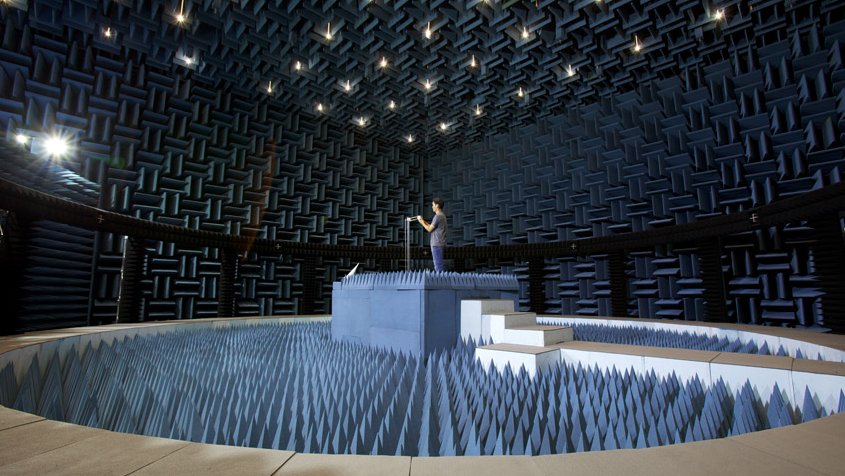
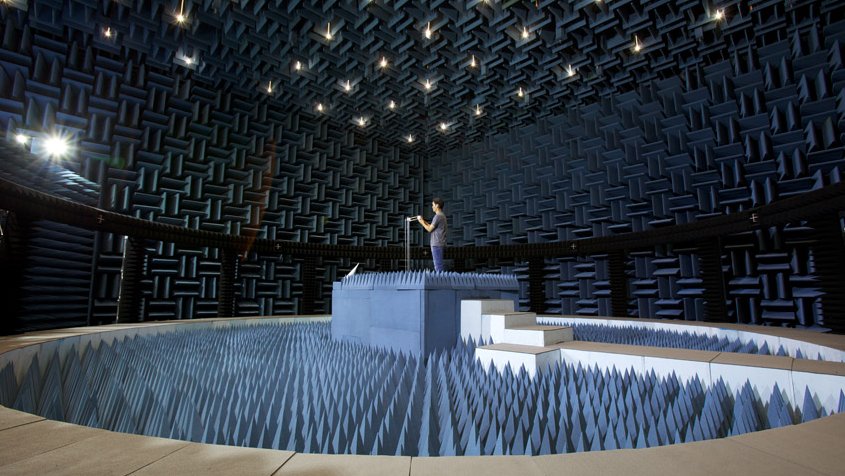
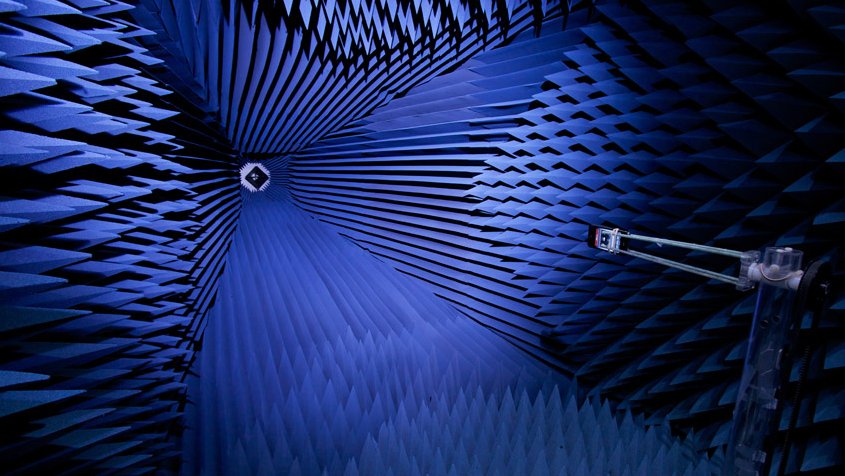
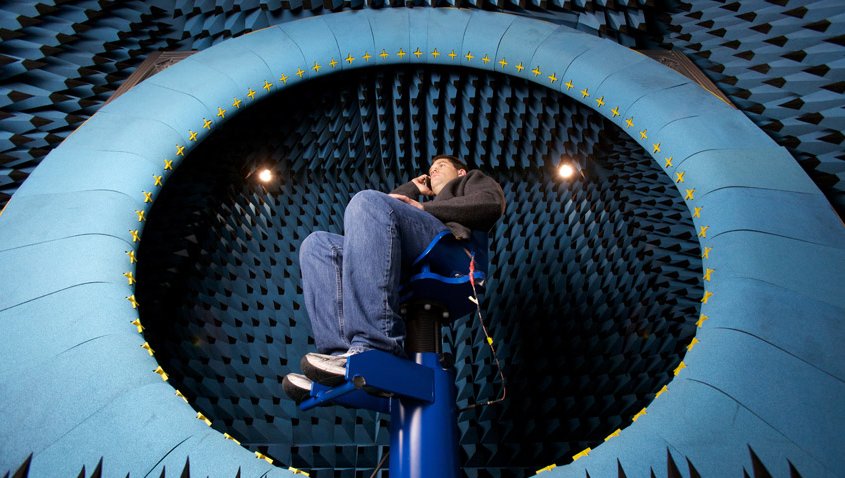
To prove that they invest a lot of time, energy, and money in making sure their phones are ready for launch, Apple showed off their state of the art testing facilities.  Apple spend $100 million to create 17 anechoic chambers.  These buildings are the largest on the Cupertino campus.  These chambers are “designed to stop reflections of either sound or electromagnetic waves”, and this makes for the perfect environment for cell phone testing.  “You have to build these rooms or you don’t get accurate results,” Steve Jobs pointed out at today’s press conference regarding the iPhone 4’s antenna problem.  The chambers are “connected to sophisticated equipment that simulates cellular base stations, WiFi networks, Bluetooth devices – even GPS satellites” to ensure that all aspects of the phone are tested properly and thoroughly.  Apple also said that they have 18 PhD scientists and engineers on hand when it’s testing time.

Apple released three stills of these strikingly designed sound proof rooms; check ’em out in the gallery below.  Also head over to Apple’s site to watch a brief video that takes you into some of the chambers and does a great job of describing how they’re utilized.

Update: Apple uploaded the behind-the-scenes video to their YouTube page.  I went ahead and embedded it for you; it’s sitting after the break.

[Via Apple; Engadget]

Continue reading Check out Apple’s $100 million phone test labs

New Droid X trailer captivates sci-fi lovers

The “See You Tomorrow” teaser trailer–erm, commercial–is making its rounds on the ‘Net and TV.  It promotes Verizon’s latest smartphone from Motorola, the Droid X.  The 8-megapixel packin’ 4.3-inch beast of a phone is now shipping for Verizon Wireless customers; $199.99 with a new two-year contract.

Hulu Plus launches on PS3, exclusive to it until 2011

On July 14 Hulu Plus, the $9.99/month service that grants you access to boatloads of Hulu content on and beyond the PC, launched on the PlayStation 3.  Currently only “a select group” of PlayStation Plus subscribers can gain access to Hulu Plus since it’s still in a preview phase.  Remember, PlayStation Plus subscribers pay an additional $50/year for the recently launch Sony service that provides gamers with exclusive game demos, trials, and other content.  If you’re a member of the PS Plus community you can download the free Hulu Plus application in the PlayStation Store and request an invitation to the preview.  If you’re selected, good for you!  If you’re not selected, and if you’re not a paying PS Plus subscriber, there’s no need to worry.  “As Hulu Plus becomes generally available in the coming months”, all PS3 owners will have access to Hulu Plus.  PlayStation 3 will be the only console-bound home for Hulu Plus through 2010.  It is expected to land on Xbox 360 and Wii sometime next year.  Full PR after the break.

[Via PlayStationBlog; Engadget] Continue reading Hulu Plus launches on PS3, exclusive to it until 2011

DJ Hero 2 contributing artists revealed

For about a month now we’ve known that DJ Hero 2 is releasing on all major consoles starting at $99 sometime this fall.  [Update: It releases October 19.]  What we’ve eagerly been waiting for is the official tracklist.  Though the mashups have yet to be revealed, we now know all 108 artists that will be featured in the game.  Some of the standouts include 2Pac, B.o.B, Bruno Mars, Daft Punk, David Guetta, Deadmau5, Dr. Dre, Drake, Eminem, Gorillaz, Jackson 5, Kanye West, Kid Cudi, Lady Gaga, Metallica…ah who am I kidding?  The list is pretty stellar so just jump after the break to check it out.

[Via Joystiq] Continue reading DJ Hero 2 contributing artists revealed

Robot responds to “beer me” phrase by–you guessed it–fetching you a beer

The hacker boys of Willow Garage put their minds together to make the coolest robot ever–one that can fetch and serve you beer.  The PR2 robot responds to a web application called Beer Me.  Let’s come up with a situation… It’s the Super Bowl and you and the fellas want a batch of fresh cold beers from the back fridge.  You, the host of the party, will hop onto the nearest computer and run the Beer Me web app.  In it you can access a pull-down menu and specify the exact type of beer everyone wants.  Once the order is set, clicking the Beer Me button will activate the PR2 robot to fetch the beers for you.  The robot will navigate your house, identify the fridge, open its door, scan the racks for the beer, grab and place the beers onto a four-holed foam block (that’s located behind the robot’s base navigation laser), close the fridge door, and report back to you with the drinks.  (Note: If your type of beer is out of stock, the robot will notify the web app so you know to make a beer run.)  Now it’s time for the handoff.  The robot uses facial recognition to detect when a face is in close proximity so that beers are not dropped; in fact, PR2 will not let go of its death grip on the bottle until a face is detected.  After you take your drink, the robot will whip out a bottle opener; you have the option to take it to open the beer yourself, or the robot can do it for you.  Mind blown yet?  See it all happen in the “OMG”-inducing video above.  I want one.

[Via Engadget; WillowGarage]

Digital eyedropper “slurps” data from computer to computer, computer to speakers (incredible!)

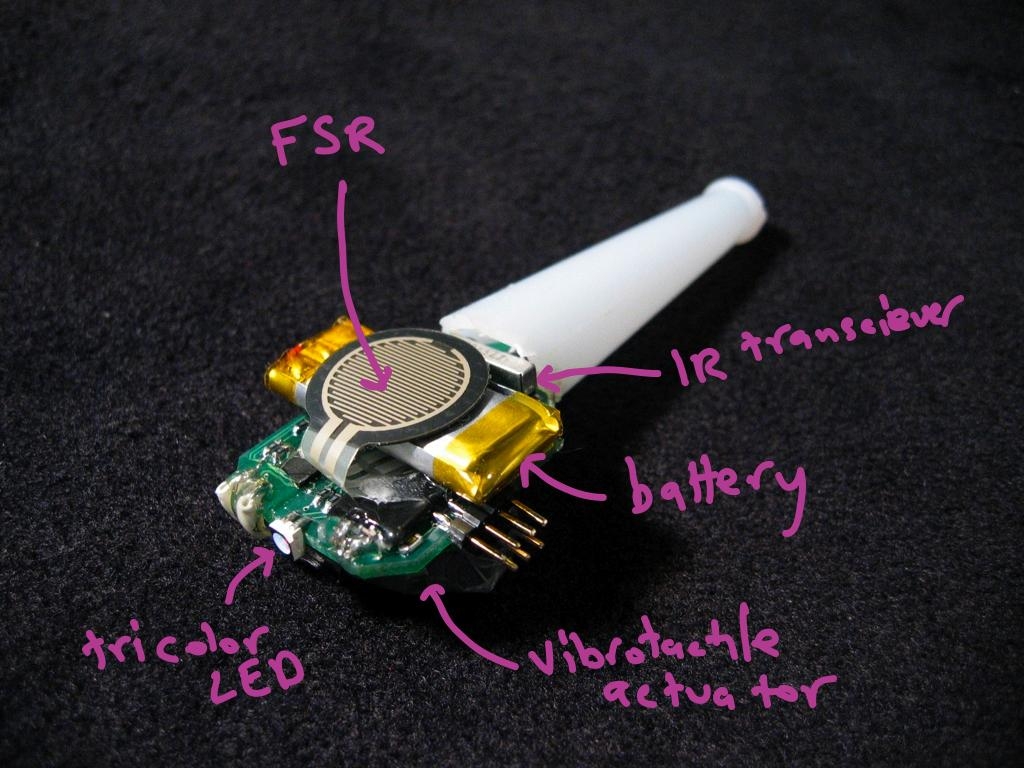
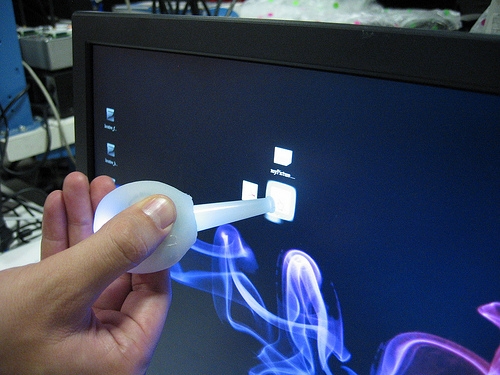
MIT Lab’s Jamie Zigelbaum, Adam Kumpf, Alejandro Vazquez, and Hiroshi Ishii have come up with one of the most brilliant ideas I have ever seen.  It’s one of those things you dream about or see in movies and think this will never exist in real life.  Well it’s real alright, it’s called Slurp, and it works like this:

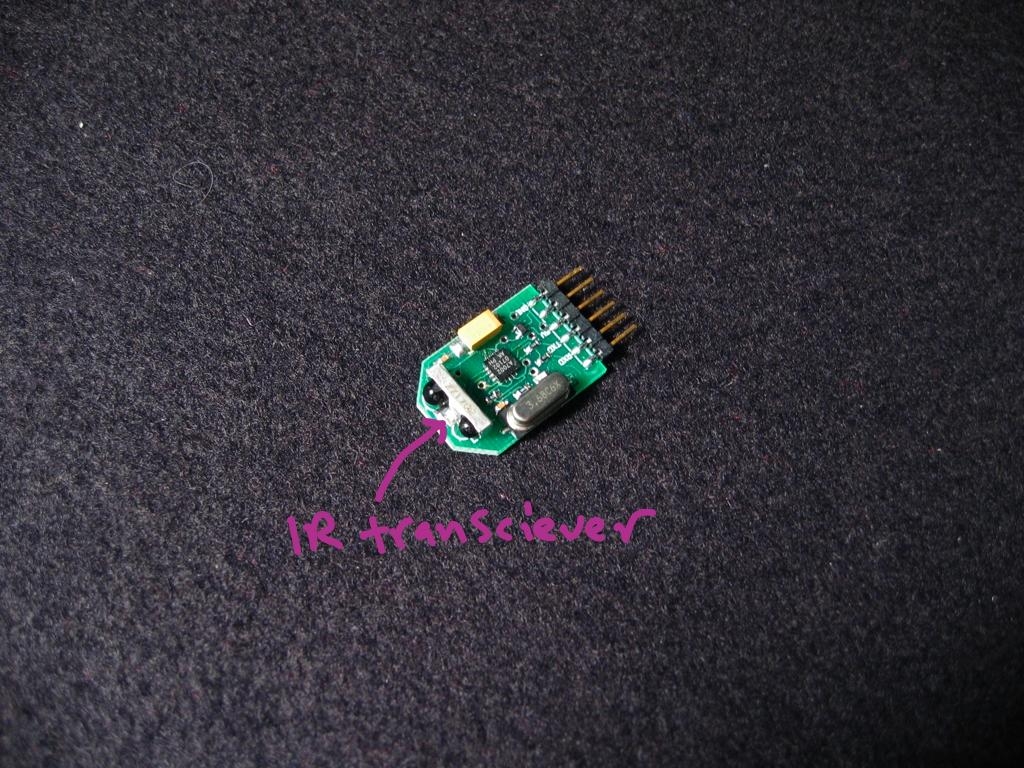
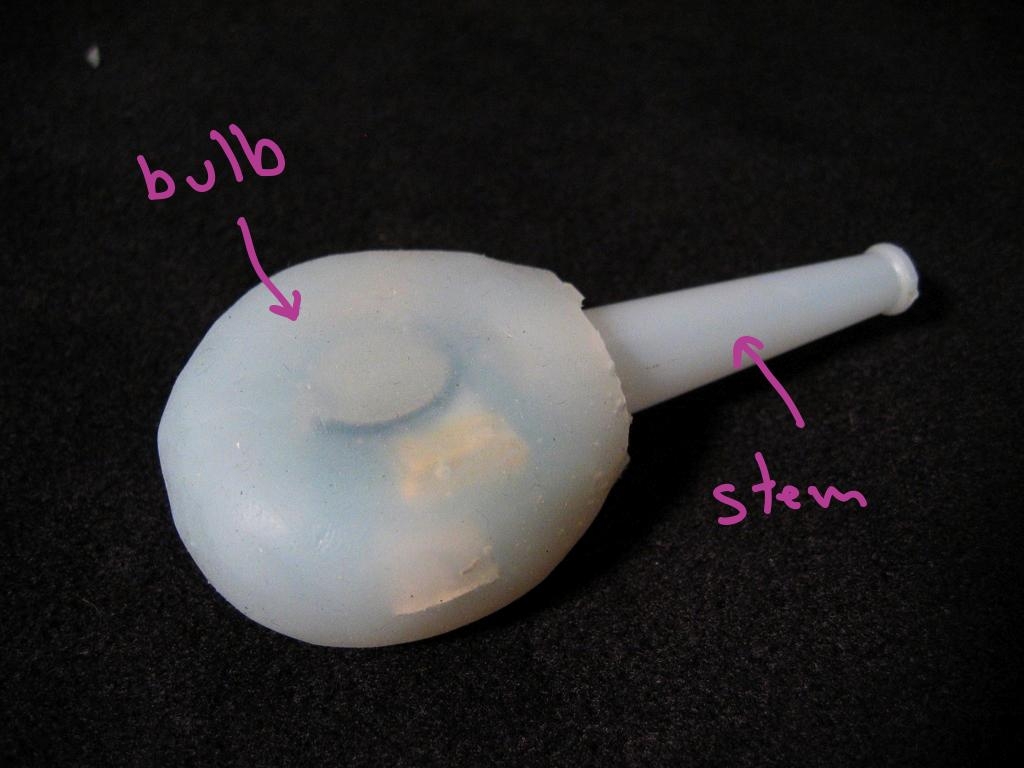
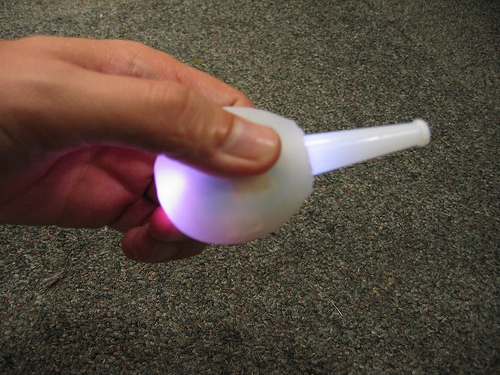
Slurp is tangible interface for manipulating abstract digital information as if it were water. Taking the form of an eyedropper, Slurp can extract (slurp up) and inject (squirt out) pointers to digital objects. We have created Slurp to explore the use of physical metaphor, feedback, and affordances in tangible interface design when working with abstract digital media types. Our goal is to privilege spatial relationships between devices and people while providing new physical manipulation techniques for ubiquitous computing environments.

You’ve got to see it to believe it, so go ahead and watch the too brief a demo in the video above.  Do you see that??  You can point an eyedropper at your computer screen, suck up specific data (like a folder), and spit it onto another computer.  Sure, it works similarly to transferring files to and from a PC with a USB thumb drive, but where’s the fun and magic in that?  And here’s something a USB drive can’t do: suck up an MP3 and spit it into a set of speakers and get instant feedback!  It also vibrates and displays light to indicate its current state of use.  Are you super interested in learning more about Slurp?  Look after the break to watch two more videos; one is another short demonstration and the other is ten minute presentation that details the magical eyedropper.  Check out the gallery below for a closer look at it.

[Via Engadget; MIT]

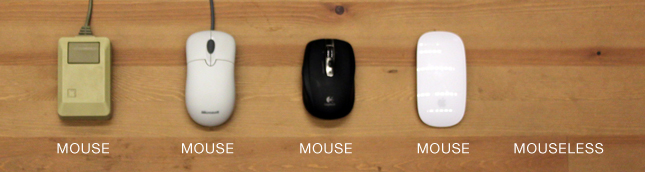
The Invisible Mouse

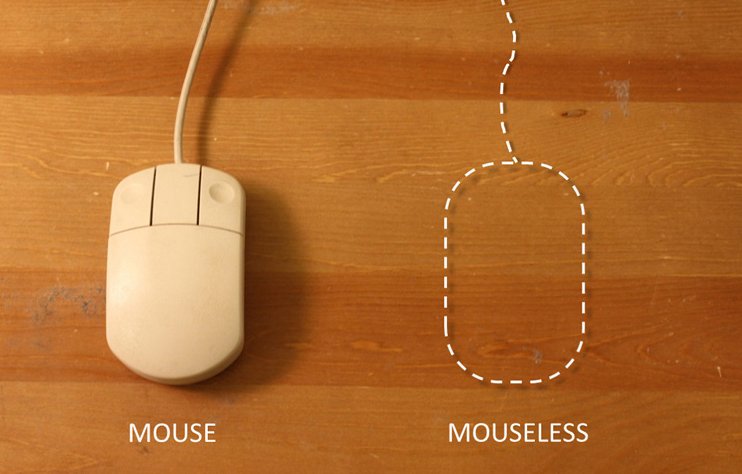
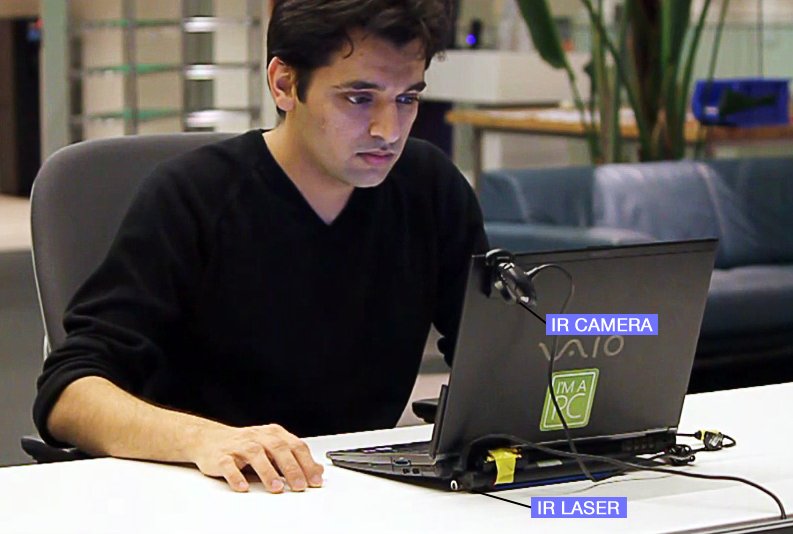
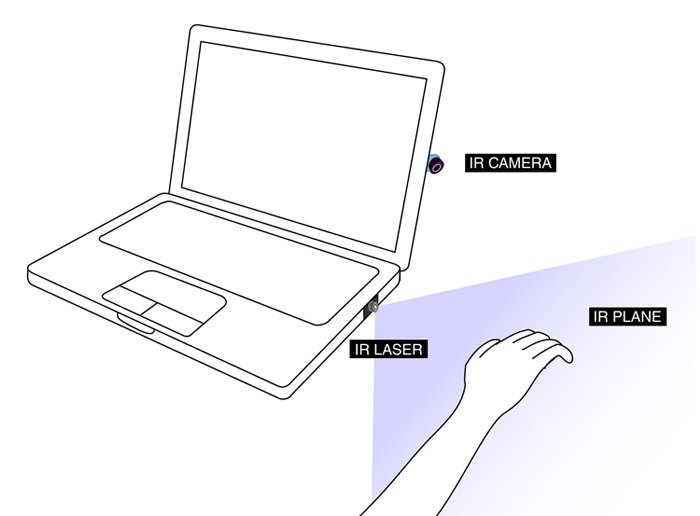
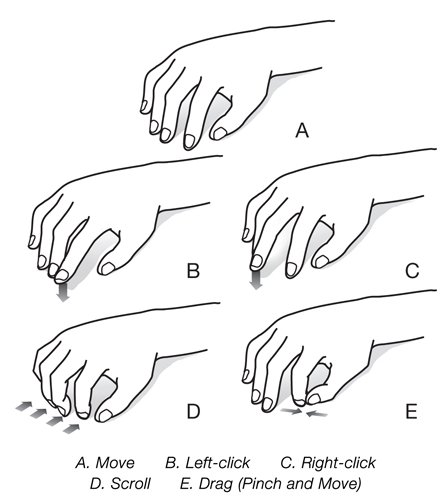
Pranav Mistry of MIT Media Lab has invented an invisible mouse he calls “Mouseless.”  By combining an infrared (IR) laser beam and an IR camera inside the side of a laptop, software can detect and track your hand movement atop of a flat surface and convert it into on-screen mouse movement, left/right clicks, and pinch/scroll gestures.  Want to get a bit more technical?

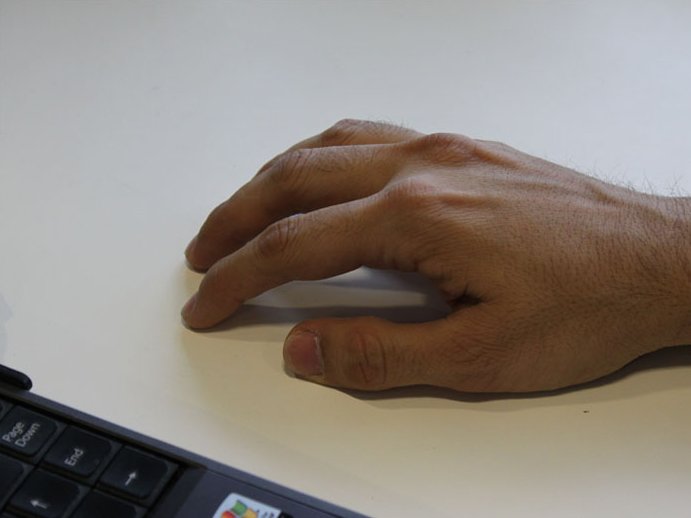
The laser beam module is modified with a line cap and placed such that it creates a plane of IR laser just above the surface the computer sits on. The user cups their hand, as if a physical mouse was present underneath, and the laser beam lights up the hand which is in contact with the surface. The IR camera detects those bright IR blobs using computer vision. The change in the position and arrangements of these blobs are interpreted as mouse cursor movement and mouse clicks. As the user moves their hand the cursor on screen moves accordingly. When the user taps their index finger, the size of the blob changes and the camera recognizes the intended mouse click.

It’s pretty incredible.  The protoype costs a mere $20, so if this technology were to be picked up by a major manufacturer I’m sure it would be a simple addition.   See it in action in the video above.  And check out some relevant stills in the gallery below.

[Via Gizmodo; YouTube; pranavmistry]

Bina48 is an advanced humanoid robot with OK conversation skills

Meet Bina48.  She’s It’s a body-less robot that manages to exhibit some compelling advancements that will surely lead to Judgement Day, but also reassures us that J-Day isn’t coming anytime soon.  Bina48 was created by David Hanson of Hanson Robotics and it’s based on a real life person named Bina Rothblatt.  Though the robot is pretty adept at answering simple questions (like any chatbot it can scour the Internet for relevant information), what’s most exciting (and rather frightening) is it’s eye movement and facial expressions and reactions.  It seemed distracted when the NYT reporter asked it questions, but when the answers did come I was impressed.  Watch the robot-human conversation go down in the video above.  And let’s all pray to our respective saviors that Moore’s law doesn’t apply to humanoid robotics.  Ah crap it does.

[Via NYT; Engadget]

BlackBerry pushes out (another) sneak peek at 6

Today BlackBerry posted a new video on YouTube that gives us another glimpse into their latest mobile operating system called BlackBerry 6.  New features like social network integration (with Social Feeds that support simultaneous postings on sites like Facebook and Twitter), universal search, an enhanced media interface, and the brand new WebKit-based browser (with pinch/zoom functionality) are teased in the breif video embedded above.  It all looks pretty great BlackBerry, but I want to see it in action on a sleek, new Blackberry device.  Let’s release this thing already!  Oh, and as Engadget points out, it’s worth nothing that the first two sneak peek videos of BB 6 feature a UI that’s make specifically for a full touchscreen device.  One wonders how BlackBerry intends to morph the new touch-friendly UI into one that’ll work on a smaller device that sports a physical keyboard–the very form factor that the company is so famous for.

[Via Engadget]