Tag Archives: cell phones

Google Buzz is Twitter on steroids

Google’s latest foray into the social networking business has everyone atwitter; so what’s all the buzz about?  Google Buzz is a new way to share updates with friends.  It goes beyond the standard “status update” from Facebook and breaks free from a 140-character tweet from Twitter, allowing you to quickly and easily share content across the Internet.  Buzz is built into Gmail.  If you have a Gmail account you are already set up for the service; your current list of contacts and people you chat with the most automatically become your followers.  That last word strikes a familiar chord, doesn’t it?  Buzz is very similar to Twitter; you follow people, people follow you, you post updates, and so on.  What makes it different (and so much more expansive) is that there’s no character limit and the means of interaction with others is much more fluid.  It fosters greater interaction with the ability to share links, photos, and video.  YouTube videos can be embedded right into posts, along with pictures that can be viewed in full size and resolution.  Besides sharing your own information, you will be alerted about new posts from followers and their group of followers; Buzz recommends posts from people you’re not directly following to promote a growing community of new friends and acquaintances.  @-responses are supported, allowing you to specifically address a friend’s post.  You also have the option to connect Buzz to other accounts like Picasa, Flickr, Google Reader, and Twitter and spread your posts, pictures, and breaking news that way.  And don’t worry–you have the option to keep things private among friends or public with the Buzz community.

Google Buzz should be fully integrated into everyone’s Gmail account by now.  You’ll notice a new small tab located under the Inbox tab labeled Buzz.  Now what if you’re away from the computer and still want to buzz about stuff?  Google’s created Buzz for mobile and it’s got some intruiging features.  What’s unique about posting on your phone is that Buzz uses location-based services to pinpoint exactly where you are when you post something, allowing your followers to find you on a map.  Tagged locations do away with long/lat numbers and display the actual names of places instead.  There are four ways to access Google Buzz on your cell phone.  (1) On an iPhone or Android phone go to buzz.google.com to access a Buzz web app; it has two views: “‘Following’ view shows buzz from the people you follow, just like Google Buzz in your Gmail; ‘Nearby’ view shows public buzz that has been tagged with a location near you, and might be from people you don’t follow. From Nearby view, you can also select a specific place from the list of nearby places and view posts attached to that place.”  (2) Buzz on Google Maps for mobile, available only on Android phones, adds a new Buzz layer to the Maps application and “allows you to see buzz near you or anywhere on the map. You can post public buzz directly from the layer, and even attach a photo from your phone.”  (3) Buzz Shortcut from Google.com allows any cell phone with a browser to access Buzz. (4) The Google Voice application, available on Android phones in the quick search widget and on iPhones in the Google Mobile App, “allows you to post buzz without typing anything. Just say ‘post buzz,’ followed by whatever you’d like to post.”

Is Google Buzz going to be a success?  Will it catch on with the masses a la Facebook and Twitter?  Buzz surely has the potential to replace Twitter as a social networking tool.  At its core, Buzz is all about “start[ing] conversations about the things you find interesting” and it does it pretty well already.  I agree with Mashable when they say “if Google Wave is the future, Google Buzz is the present.”  The Google Wave beta made heads tilt in confusion, and Google thinks Buzz is an appropriate stepping stone to it.  Buzz goes beyond email and IM but it does not overstep its boundaries (aka the craziness that is Wave).  Thing is, Buzz does not feel like a transition service because it comes off as Twitter on steroids–something we’re used to, just beefier.  Buzz is already making noise; today Facebook and AOL have joined forces to allow IM users to chat with Facebook friends over the AIM client.  And Twitter should be scared, too; their 140-character limit and lack of expanding services may start to wear thin with Buzz lurking around the corner.  A potential issue for some may arise in the fact that Buzz requires Gmail sign up but to these naysayers I say so what?  Gmail is the best Internet email client out there anyway; now’s a better time than ever to jump on the bandwagon and join the Gmail community.  Because that’s what it’s becoming thanks to Buzz–one giant place to share the things you find interesting with others.

Google Buzz in Gmail, for mobile, and the launch event can be found in video form after the break, you know, if you’re into that stuff.
[Via GoogleBlog, here & here]

Continue reading Google Buzz is Twitter on steroids

AT&T & Sling make nice; Slingplayer to stream live TV over 3G

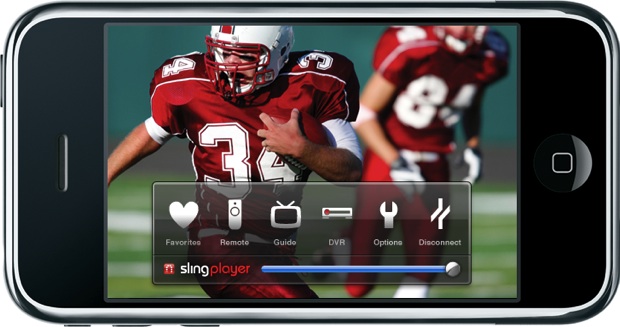
When Sling released the $29.99 Slingplayer app for the iPhone back in May, AT&T restricted it from streaming live TV over its 3G service because they were worried the overload of data would bring its cell service to its knees.  Poor AT&T.  This week AT&T has come out and stated they have been working closely with Sling to optimize Slingplayer’s streaming capabilities so that it would not hurt AT&T’s customers.  As soon as Apple approves it, a free update will allow Slingers to stream their content over 3G, in addition to WiFi.  With news of AT&T approving VoIP calls and now Sling streaming over 3G, it seems as if AT&T at long last has come to accept the fact that restricting significant features on its most popular device is a major no-no.

[Via Engadget]

Bridging the gap between digital and the physical by making content “graspable”

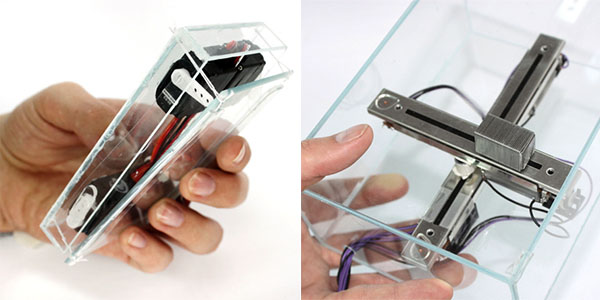
PhD student Fabian Hemmert asks, “How can we make digital content graspable for us, for humans?”  How do we get from the physical to the digital?  He introduces three conceptual cell phone models (“mobile-shaped phone boxes,” really) that could theoretically help bridge this gap that has yet to be conquered.  The “weight-shifting mobile” uses a iron weight that moves around, giving the user a sense of physical mass.  For example, when you’re exploring your way through a city using Google Maps, the weight can direct you in the right direction as it shifts the center of gravity inside the phone, making you feelwhich way to turn.  Next up is the “shape-changing mobile.”  Say you have a wide collection of eBooks on your device.  If you’re reading a short twenty page story, the device will make itself thin; if you’re reading a lengthy Harry Potter novel, the device will expand, making the experience more realistic, as if you were holding a thick book.  It can also change it’s shape to customize the grasp, have the device lean towards you when in use, etc.  The “living mobile phone” is downright strange: this model has a “breath” and “heartbeat.”  It’s meant to make the device seem organic in your pocket.  In standby mode, the phone “breaths” up and down; when you receive an alert, it’s “heart rate” increases and the up and down motions speed up.  To calm it down?  “Pat it behind the ears.”

Hemmert’s ideas are innovative andinteresting, though I feel the implementation of such technologies will remain far-out research assignments for the forseeable future.  He ends the demonstration with this postulation: “Not humans should get more technical in the future; rather than that, technology a bit more human.”  Intriguing, intellectual, and plain ‘ol creepy if you ask me.

[Via InformationAestheticsEngadget]

Microsoft enters the world of info-tagging with MS Tags app

A “tag” is a multicolored barcode that can be placed on (or in) a number of products and services, such as product packages or magazines.  The Microsoft Tag application (which will be available for download on a number of handsets, including Windows Phones, the iPhone, and others) takes a picture of the unique barcode stamped on a product and relays all kinds of information about the particular item at hand back to you.  Tags can push all types of information to you including websites, pictures, and video.  “It’s the hyperlink in the physical world,” says a Microsoft rep.  He also says MS will not charge for the app or for companies to place barcodes on their products.  This is fun and all, but Microsoft is late to the game.  I understand that the technologies are different (Tags can lead you to specific videos and other info), but heck–Google Goggles can search for a product’s information without barcodes!

[Via CNET; Engadget]

Catch your spouse snooping around red-fingered with iTrust app

Do you think your spouse is cheating on you?  Do you have trust issues?  Is your name Elin Woods?  In any case, the iTrust app is for you!  It works like this: You take a snapshot of your iPhone’s homescreen (holding down the home button + the power button), open the iTrust app, select the homescreen image you just took, and tap start.  That’s it.  Now when someone tries to go snooping on your phone he/she will get passed the lock screen to find a frozen image of your homescreen.  The culprit will think the still image is actually the homescreen and will go about pressing various apps trying to pry into private text messages or emails.  All the while the app is recording his/her every move.  When you get back to your phone you can open iTrust and playback a log to see what exactly the culprit was trying to find.  Neat, huh?  Obviously there are many ways to bypass the iTrust mirage but the concept is interestingly sneaky, isn’t it?  iTrust is available in the App Store for a buck.  Full demo in the video above.

[Via Gizmodo]

Operation Chokehold: A mission to destory AT&T this Friday

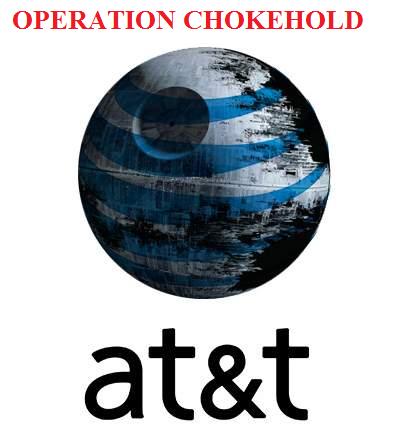
Hello soldier.  That’s right, you are a soldier in a war against a strong and controlling enemy, AT&T Wireless.  For as far back as we can remember, AT&T’s cell and data service have been atrocious (for the most part) with dropped calls and sucky 3G coverage.  Verizon gave a hand in this fight with their “there’s a map for that” ads, proving to the world that AT&T’s 3G coverage is abysmal.  Now it’s our turn.  Fake Steve is leading the next phase in the war against AT&T with a foolproof plan that will bring AT&T “to its knees” this Friday.  I oblige you to read this very important memo:

Subject: Operation Chokehold
On Friday, December 18, at noon Pacific time, we will attempt to overwhelm the AT&T data network and bring it to its knees. The goal is to have every iPhone user (or as many as we can) turn on a data intensive app and run that app for one solid hour. Send the message to AT&T that we are sick of their substandard network and sick of their abusive comments. The idea is we’ll create a digital flash mob. We’re calling it in Operation Chokehold. Join us and speak truth to power!

To reiterate Fake Steve’s orders: On December 18 (this Friday) at 3:00 PM EST, take up arms by whipping out your iPhone and running the most data intensive apps you got for one hour.  It’s time to take a stand and show AT&T we are no longer going to stand by idly as they publicly spend money on anti-Verizon ads instead of beefing up their cell and data coverage across the nation.

Mission: Operation Chokehold commenses tomorrow.  Soldier, be prepared and make us proud.  I will report back with results after the mission is completed.  Good luck.

Continue reading Operation Chokehold: A mission to destory AT&T this Friday

Nokia unveils a revamped Symbian user interface

Nokia, Nokia, Nokia.  My first phone was a Nokia.  Granted, it was what they now call a “dumbphone.”  It made calls and sent texts on a colorless screen.  Ever since then I haven’t been a big supporter of the cell phone manufacturer.  Though their modern devices are very sleek and quite beautiful, their user interface is very clunky and not very intuitive.  Think of it as anti-iPhone OS, if you will.  It takes many clicks to get to a simple destination, etc.

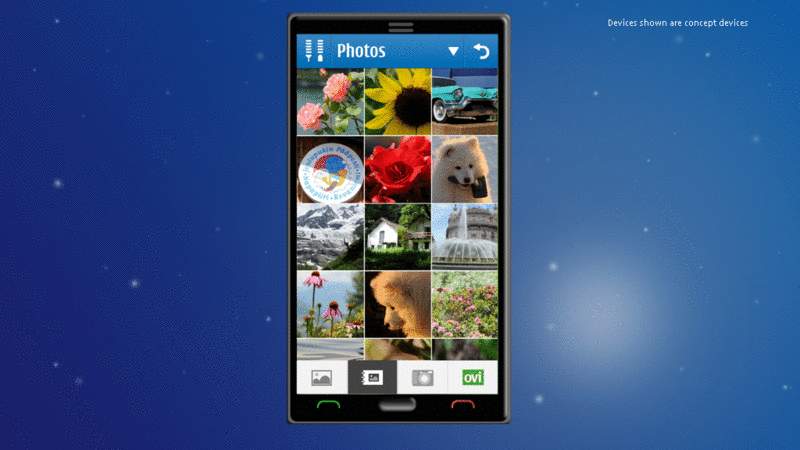
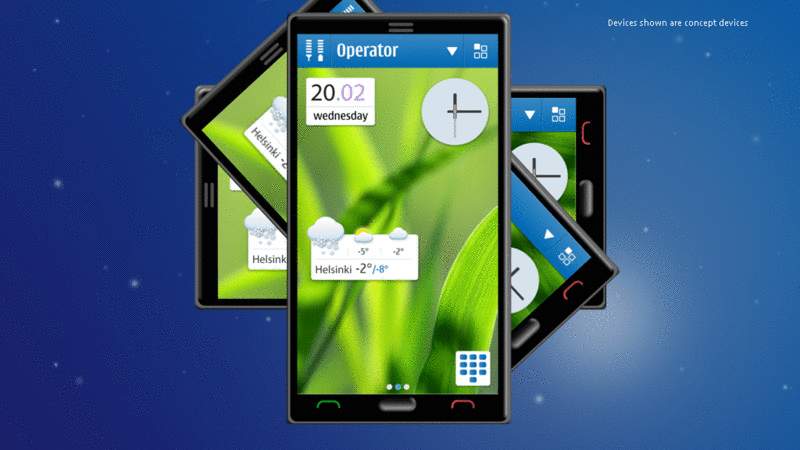
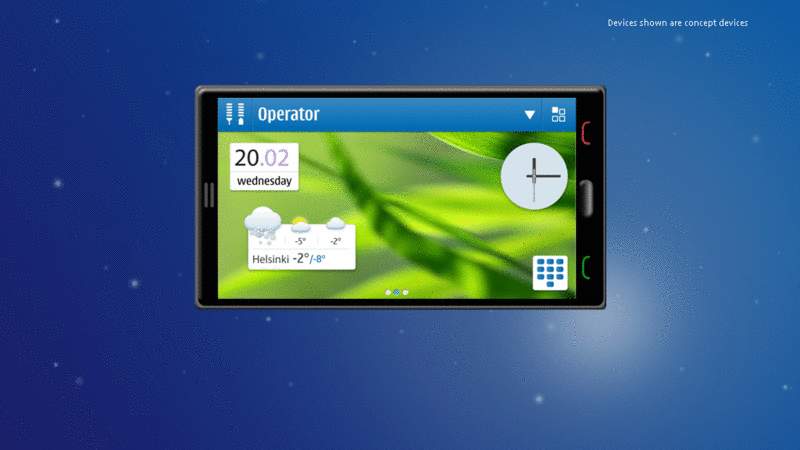
This past week Nokia surprised us with a peek into their future user interface that promises to be three times faster than current Nokia Symbian OS devices and much more user friendly.  In fact, Nokia CEO Olli-Pekka Kallasvuo calls the new experience “magical.”  Nokia just might be able to pull this off because they finally understand that their problem lies in the user interface, not the Symbian OS.  Skeptics might advise Nokia to start from scratch but this would be wasteful; the Symbian OS structure has good intentions, it’s just been the way it relays information via the complicated no good user interface that has had users frustrated.

In addition to this major software upgrade coming sometime next year, Nokia also promises new devices with multitouch support on “large capacitive displays.”

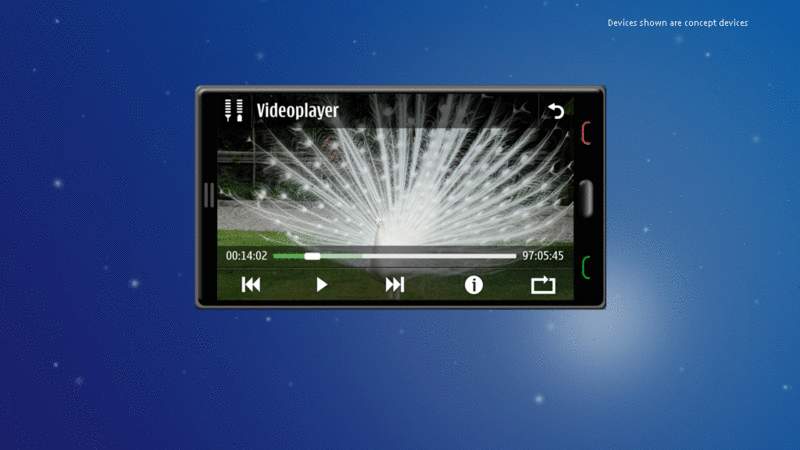
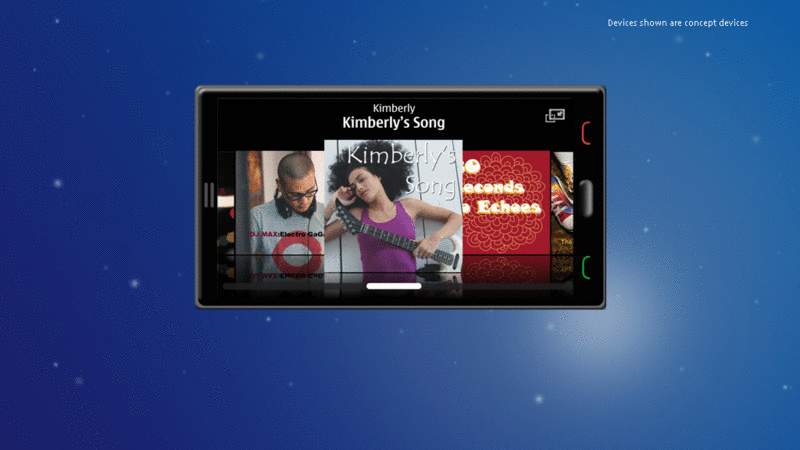
Check out the gallery below for some screenshots of the new UI and be sure to look after the break for a video of the announcement and a simulated guided tour.

[Via Engadget]

Continue reading Nokia unveils a revamped Symbian user interface

AT&T and Verizon drop all lawsuits…for now

AT&T Commercial

Last we heard in this AT&T vs. Verizon Wireless “There’s a Map for That” commercials debacle, AT&T had lost in court against VZ when they tried to force VZ to pull all of their Map-related advertisements from the air.  The judge had marked a date later this month where the two companies would battle again over this silly issue.

Now, however, AT&T has decided to drop all its lawsuits against Verizon.  Finally.

Instead of putting their money towards upgrading their 3G network, AT&T has decided to spew anti-Verizon ads featuring the quirky Luke Wilson.  Let’s take a step back for a moment.  This whole thing started when Verizon aired a commercial comparing their widespread US 3G coverage (on a map) to AT&T’s dismal coverage.  AT&T sued them because they stipulated that mass audiences would read their sad 3G coverage for their vastly more widespread voice coverage.  (AT&T, I doubt anyone made this blunder in the first place.)  After losing in court they’ve decided to create these Luke Wilson ads that fight back against Verizon in a nonsensical way; these ads don’t focus on AT&T’s 3G coverage, they are all about 3G speed.  Hey AT&T–Verizon’s got the SPEED, too; plus, they cover much more of the US than you do.  I’ve said this twice now, and I’ll say it one more time–AT&T, stop the lawsuits and advertisements and start actually expanding your 3G coverage!

Oh, and not only do Verizon’s ads make sense they are far superior than yours.  See for yourself.  Look after the break for the latest “headless Luke Wilson” AT&T and Verizon “misfit toys” spots.  (True this ad and other recent VZ ads have poked at the iPhone, but what they are really hitting hard is AT&T’s dismal 3G coverage.  Let ’em have it.)

[Via Engadget; Gizmodo]

Continue reading AT&T and Verizon drop all lawsuits…for now

Fring brings video calling to iPhone and iPod touch

Fring, a popular VoIP  application in the Apple App Store, now allows its users to put their cameras to work by enabling video calls with other cell phone/computer users.  But alas, the iPhone lacks a front-facing camera and so Fring is forced to limit the video calling to a one-way show.  Fring developers are ready to incorporate two-way video conferencing once “a front camera is placed on these.”  The one-way video calls work over Wi-Fi, between Fring-Fring and Fring-Skype callers.  Remember, though, you must have the iPhone 3GS in order for the video calling to work.  (I mistakingly tested it out on iPhone 3G and was quickly disappointed.)  Anyway, this is cool stuff.  Granted, video conferencing capability has been around for some time with Nokia devices, but now it’ll start hitting the mainstream folk with iPhones and iPods touch.

Be sure to look after the break to find a Fring commercial that shows all this in action.

[Via Engadget; Gizmodo; Fring Blog]

Continue reading Fring brings video calling to iPhone and iPod touch

AT&T brings Verizon to court, loses

It has been reported that a federal judge has ruled against AT&T’s request to pull the Verizon “There’s a Map for That” advertisements from the airwaves.  No surprise here.

What’s interesting, though, is that the judge has deemed it necessary for the two celluar carriers to meet again in court to discuss the matter further.  Apparently the judge called the ads “sneaky” and said that it is possible that viewers may mistunderstand the ads intent becuase “most people who are watching TV are semi-catatonic.”  Ha!  The court meets again on December 16.

For now, Verizon has all the freedom in the world to continue pumping out these advertisements for the holiday season without any scruff from AT&T.  Unless you count this sad, terrible ad featuring one of the Wilson brothers:

[Via Engadget, here & here]