Category Archives: Technology

Concept: Google Mail envelopes make e-mail physical

google_mail3

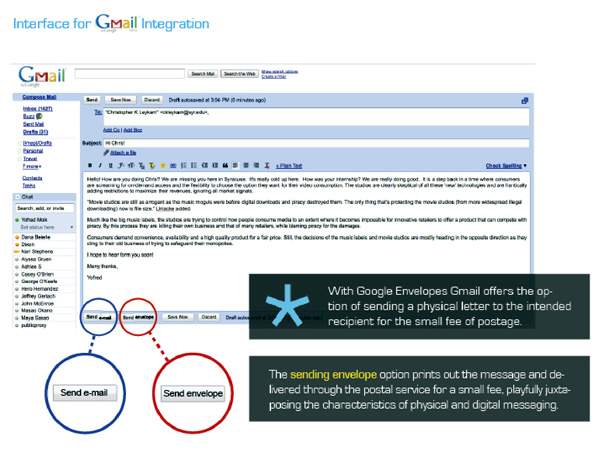
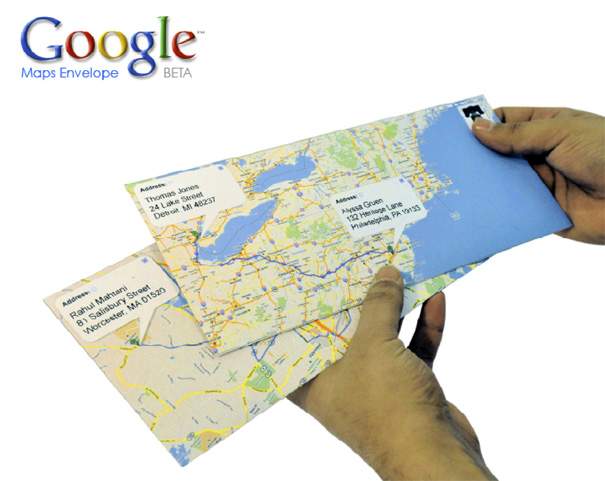
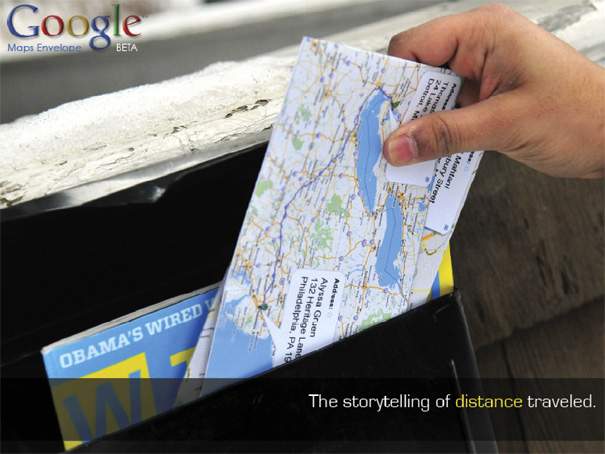
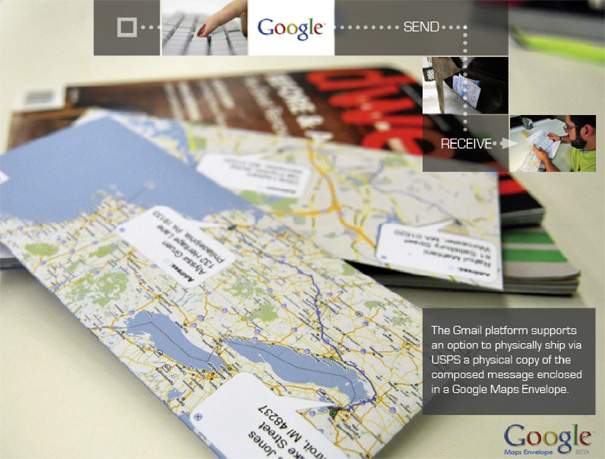
Industrial designers Rahul Mahtani & Yofred Moik have imagined a new way to go about emailing.  This is all conceptual thinking, mind you, but take a knee and listen here.  Google Mail Envelopes is designed to be built into the Gmail service.  When you’re ready to send off an email, you’ll be given two options: send email (as usual) or “send envelope.”  When you click the new button, Google representatives are notified and they print out your email, package it into a Google Maps decorated envelope, and send it off to its destination via the United States Postal Service for a small fee.  The envelope design is neat; the return address and destination labels are placed inside Maps bubbles and they each point to their respective locations on the map.  The two locations are connected by a line, the same line that’s formed when you look for directions online at Google Maps.  In other words, the mail’s exact route is labled on the map on the envelope.  Although this concept is one that will likely never make it into reality (privacy concerns, Google employing letter senders), the idea is quite fascinating.  Turning electronic mail into a physical letter is an option some people might find useful.  It’d be a faster, more efficient way to send a letter–it would eliminate the need to shop for stamps, for one thing.

[Via YankoDesign]
Apple reports 2010 Q2 earnings: $3.07b profit, Macs up 33%, iPods down 1%, iPhones up 131%

As another quarter of the year flies by, Apple posts its positive earnings.  Check it: Apple posted revenue of $3.07 billion profit on $13.5 billion in revenue.  (Compare this to one year ago, Apple posted revenue of $9.08 billion on $1.62 billion in revenue.)  Says Steve Jobs: “We’re thrilled to report our best non-holiday quarter ever, with revenues up 49 percent and profits up 90 percent.”

Here’s a breakdown of each product category.  Apple sold 2.94 million Macs during the quarter (representing a 33 percent unit increase over the year-ago quarter); 8.75 million iPhones (representing a 131 percent unit growth); 10.89 million iPods (representing a 1 percent unit decline).  Since the iPad was just released into the market, it’s too early to tally those numbers.  But overall, Apple has done it yet again!  Money in the bank, ya’ll.  Jobs looks to the future: “We’ve launched our revolutionary new iPad and users are loving it, and we have several more extraordinary products in the pipeline for this year.”  Cough–iPhone 4–cough.

The stock market responded graciously to the earnings announcement.  Apple stock (APPL) closed at an all-time high of 259.22, jumping nearly six percent from the previous day.

[Via Apple]

The next iPhone is leaked into the wild

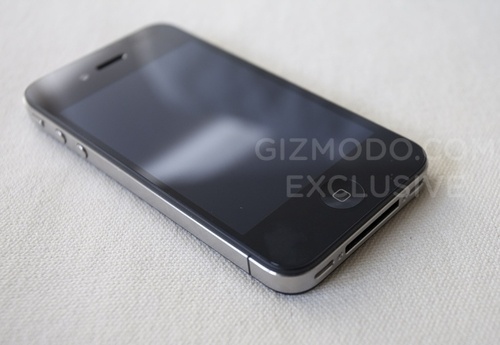
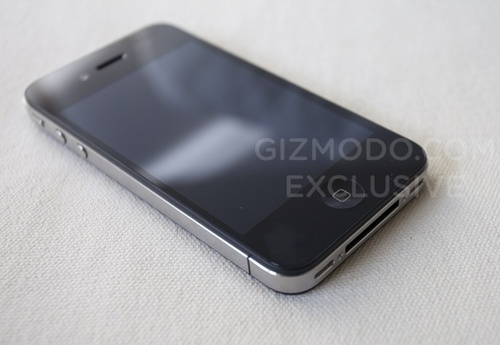
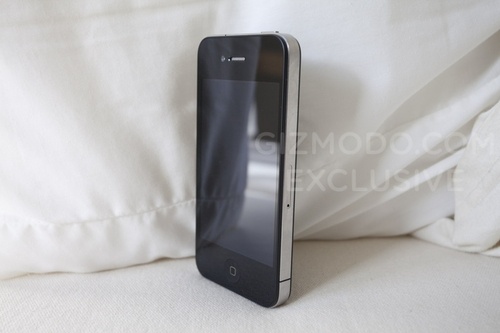
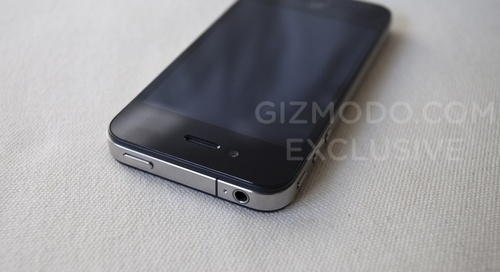
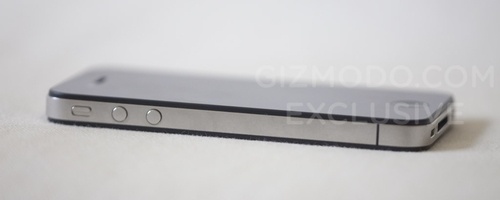
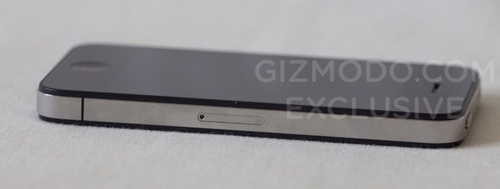
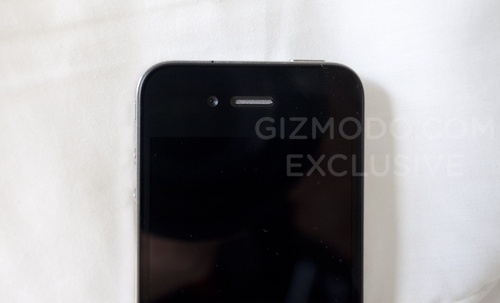
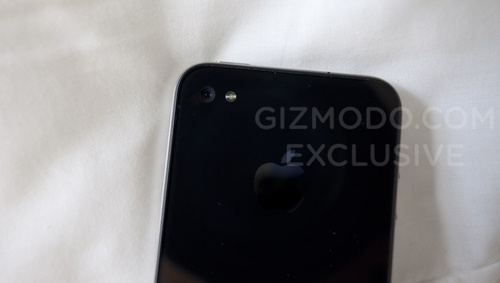
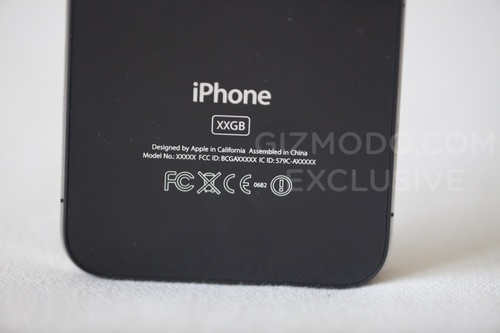
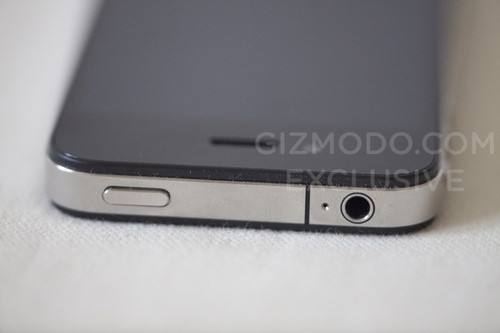
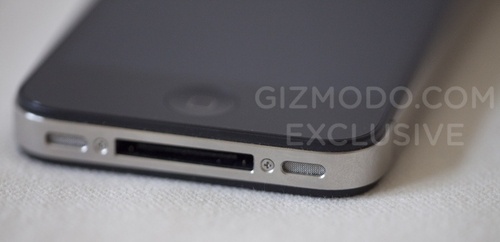
The fellas at Gizmodo have got their hands on the fourth-generation iPhone, confirming Engadget’s initial report on the device being leaked into the wild.  The new iPhone is thinner and a bit heavier than its 3GS predecessor (it measures 4.50 by 2.31 by 0.37 inches and weighs 140 grams, three more than the 3GS) and everything is more squared off.  The aesthetics of the device go in a different direction with the new model.  The back is entirely flat and is composed of either glass or ceramic.  Also there’s an aluminium border that runs completely around the exterior.  The silent switch, power, and volume buttons are placed in their familiar positions but are now metallic.  Notice I said volume buttons; the single rocker has been replaced with two separate buttons for volume up and down.  Giz theorizes that this will likely result in one of the two buttons being designated as a shutter button for the camera.  The SIM slot is now a MicroSIM slot and its been moved from the bottom to the left side of the phone.  There’s also a second mic located at the top next to the headphone port, likely for noise cancellation purposes.  The display is slightly smaller than the 3GS’s, but its resolution is much greater.  Though Giz cannot determine its exact resolution, they would not be surprised if it sported a 960×640 screen that’s been sitting in the rumor box.  On the back there’s an upgraded camera with a larger lens plus flash.  On the front next to the earport there’s a *front-facing camera*.  Get ready for on-the-go video Skype calls!  Some other nuggets of information: its got a 16% larger battery and the internal components have been miniturized.

This prototype model of the next iPhone unfortunately cannot boot up iPhone OS 4.  That means there’s no way of finding out its storage capacity, how high-rez the screen actually is, and other secrets hidden within OS 4 built for this device (iChat, anyone?).  Do you need proof that this is the real deal?  Head over to Gizmodo and read their exhaustive breakdown for proof.  Until the final model is (likely) revealed this June at WWDC, bask in the photos and video (after the break) Giz has provided with the world.  iPhone HD, you are so close yet so far away…

[Via Gizmodo]

Continue reading The next iPhone is leaked into the wild

All public Tweets will be archived at the Library of Congress & on Google

Fellow Twitterers, your Tweets are about to become part of United States history.  On Wednesday Twitter announced it will be donating access to the entire archive of public Tweets to the Library of Congress “for preservation and research.”  Every 140-character public Tweet made since 2006 will find a home next to the Declaration of Independence.  According to Twitter founder Biz Stone, “only after a six-month delay can the Tweets will be used for internal library use, for non-commercial research, public display by the library itself, and preservation.”  Can you believe it?  A digital archive of Tweets.  Future tweens will get a glimpse into our world dominated by pop sensation Justin Bieber and they’ll think he was king.  All joking aside, Twitter has functioned as a virtual space where breaking news of births, deaths, tragedies, and triumphs have spread across the globe, and future generations will be able to see how we utilized social networking to quickly disseminate information and share experiences with one another.  Pretty profound if you ask me.

In related news, Stone announced a partnership with Google, introducing a new service called Google Replay.  Replay “lets you relive a real time search from specific moments in time” with Tweets.  In addition to viewing Tweets in an archived digital database at the Library of Congress, Replay is another “new way to revisit tweets related to historic events.”  Right now the service only goes back a few months, but Stone promises it will eventually be able to access Tweets since Twitter’s inception in 2006.  Google is rolling out the feature right now, and it will be made available globally within the next few weeks.  For now, Google Replay can be accessed here.  Try it out!  Search a specific keyword and experience how events relating to it unraveled in time with Tweets.

[Via TwitterBlog; GoogleBlog]

NASA and GM are sending world’s first humanoid into space

NASA and General Motors are collaborating to send a robot to the International Space Station to aid the human astronauts who reside there.  Sure we’ve sent robots into space before; you’ve heard of the Mars Rover, right?  This is different.  Robonaut 2, nicknamed R2, is preparing to become the first humanoid robot to enter space.  It’s got arms, legs, a body, and head.  R2 looks like one of us.  So what’s it going to do up there?  According to The New York Times, it “will be monitored in space to see how it performs in weightlessness, but NASA hopes to eventually use R2 to assist astronauts during space walks and to work alongside engineers in the space station.”  R2 is scheduled to leave for space via the Space Shuttle Discovery in September.  To infinity and beyond, I say!  Look after the break for a video that takes you behind the construction of R2.

[Via NYT; Engadget]

Continue reading NASA and GM are sending world’s first humanoid into space

NASDAQ and CEA introduce a Smartphone Index

This is an awesome sliver of news coming from the business world.  NASDAQ and the Consumer Electronics Association have teamed up to announce NASDAQ OMX CEA Smartphone Index.  The new index is comprised of 84 companies “that are primarily involved in the building, design and distribution of handsets, hardware, software, and mobile networks associated with the development, sale and usage of smartphones.”  The smartphone industry has certainly become an important and impactful industry as of late; receiving its own index in the stock market further cements its significance thus far in the world of technology.  Some of the companies in the index include Apple, Google, and Research in Motion (RIM).  It was given a starting value of 250.00 on April 12; today it currently sits at 257.14.

[Via MarketWatch; Engadget]

Multitouch? Pfft! Try multi-toe.

A bunch of bright minds at the Hasso Plattner Institute in Germany have been working on this research project they call “multi-toe interaction.”  Basically it’s a multitouch floor that can recognize a person based on their shoe pattern.  But I’ll let the masterminds explain:

The key factor of the shown design is that it is based on frustrated total internal reflection sensing. FTIR allows it to identify and track users based on their sole patterns. The floor recognizes foot postures, distinguishes users who interact from people walking by, and enables high-precision interaction. In addition, the floor can approximate users’ head positions based on the pressure profile in the soles and it extracts enough details from soles to allow users to play first person shooters by balancing their feet.

So precise!  Not so sure if this can ever be practically implemented, but it’s always good to see unique implementations of a multitouch interface.  Even if it involves stinky feet.

[Via YouTube; Engadget]

A virtual window into a scene you wish lived outside your home

One Ryan Hoagland has a created a DIY virtual window of sorts using two 46-inch Panasonic plasma displays, a Mac Pro workstation, a Wii-mote with a custom-built IR-emitting necklace, Bluetooth, and custom software called Winscape.  If everything is implemented correctly, it should result in two large virtual windows that could theoretically project any scene you’d like.  And thanks to headtracking technology, the windows will create an illusion that you are actually peering inside this virtual realm.  Oh, and you can control scene selection with an iPhone app.  Intruiged?  You can build one of your own virtual landscapes come this July when Hoagland plans to sell basic kits for under $3000.  Look after the break for a timelapse video of its construction.

[Via RationalCraft; Engadget]

Continue reading A virtual window into a scene you wish lived outside your home

IBM’s interactive billboard changes color based on your outfit

IBM’s Smarter Planet campaign acknowledges the importance of intelligent systems in the world today.  In the retail industry, for example, consumer data around something as simple as color can have massive implications around shipping, inventory and, ultimately, overall sales.  This interactive billboard is a simple and engaging virtual demonstration of how a smarter retail system can work.

In other words, IBM is trying to make retailers and consumers alike recognize the importance of technology in the retail industry.  Imagine, if you will, a world where when you walked into a Gap clothing store, a digital personal assistent recognized you by what you were wearing and helped you pick out a new season of clothes based on previous choices and personal taste.  Yeah, that’s what IBM is going for here.

[Via Gizmodo]